

There is no published price for plumbing contractor insurance in Georgia, and any number you find before an underwriter has seen your crew is a guess. A carrier builds the figure from your specific operation — the people on your payroll and the work they do, the sewer and supply lines you leave behind, and the coverage you carry. This guide lays out the drivers that decide what a Georgia plumbing contractor pays.
Owners who just want a number find that frustrating, but for this trade the drivers are specific enough to be worth more than a fake average. A metro service-and-repair shop and a coastal new-construction crew are the same trade only on paper, and a carrier reads them from different pictures. Below is what moves the number, and how each piece works.
Why Georgia has no published plumbing insurance price
A premium is what an underwriting model produces after it weighs your real exposures — how many people you employ and what they do, the revenue behind your finished work, your loss history, and the limits your contracts require. Change an input, and the output changes. For a plumbing contractor two facts dominate: a crew exposed to trench, confined-space, and scald-and-gas hazards, and the water-and-contaminant exposure on the connections it leaves behind. The sections below are those drivers in turn. The Georgia plumbing contractor insurance page carries the market and regulatory overview that sits behind them — that page is the market authority, this one answers the cost question.
What makes Georgia its own cost conversation is the spread between its markets. Metro Atlanta’s aging core drives contamination-prone sewer, main, and backflow work, the coast around Savannah stresses systems over high groundwater, and the growth corridors keep new-construction volume high — and a carrier prices a contractor differently depending on which of those it lives in. The master-owned licensing sits on top of all of it, so an underwriter is reading both the credential behind the company and the geography behind the book. The more clearly you can place your revenue on that map, the more accurately a carrier can weight your pollution, completed-operations, and contract-limit exposures.
Crew payroll and Georgia workers compensation
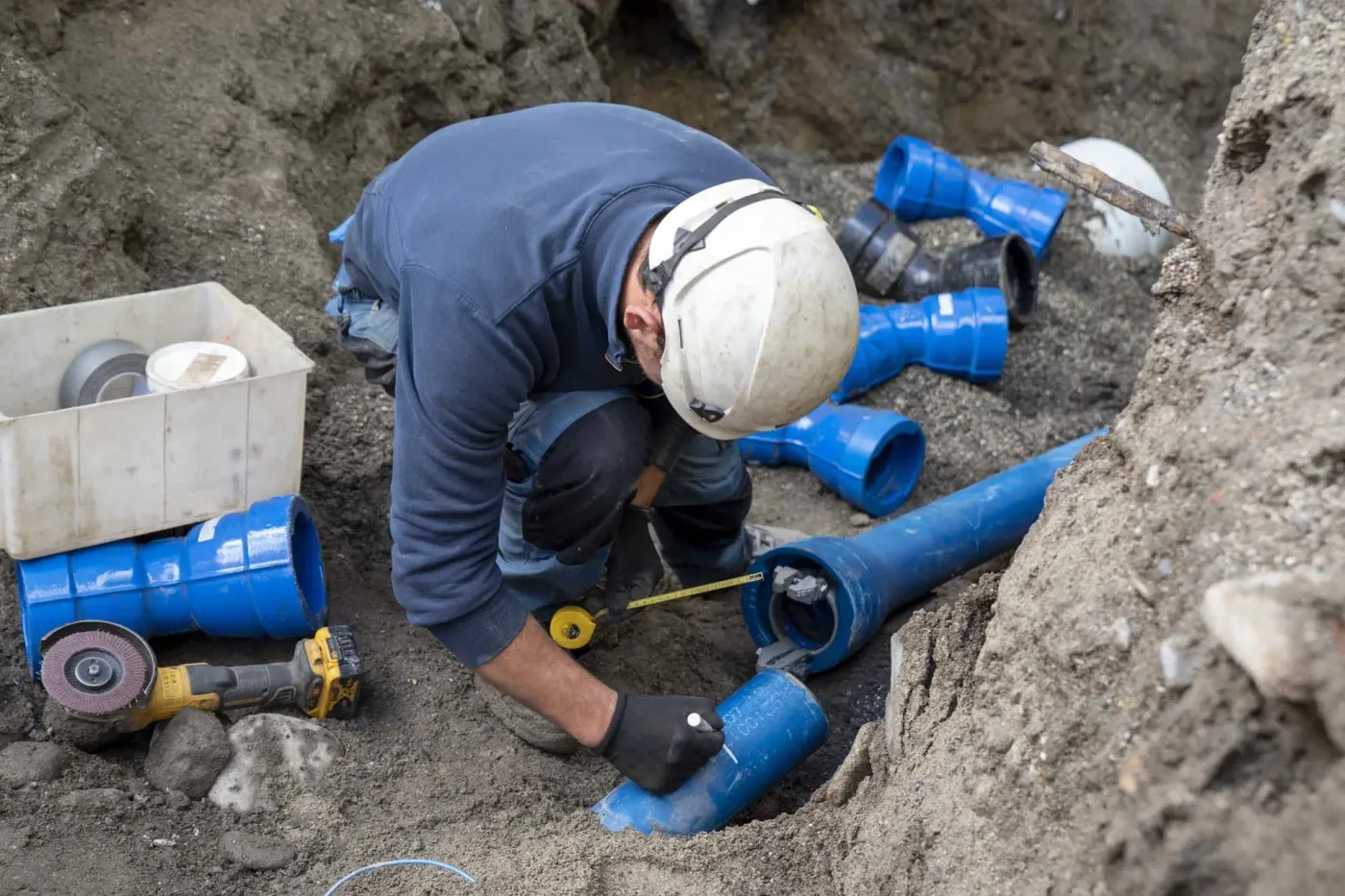
Payroll is usually the heaviest driver, because it does double duty — it is the basis a carrier rates workers compensation on, and it feeds a large share of general liability. The figure alone is not the whole story; what the payroll pays people to do matters just as much. Plumbing carries genuine injury severity, and for tangible reasons: crews open trenches that can collapse, enter confined spaces short on air, and work around scald and gas hazards. That is why the Occupational Safety and Health Administration treats confined-space entry and excavation as their own safety disciplines, and why an underwriter looks hard at your crew’s safety habits.
Georgia writes comp through private carriers, and it is mandatory for most employers with staff. There is no state-fund quirk to navigate; the market runs privately, overseen by the Georgia Office of Insurance and Safety Fire Commissioner. The practical point is that a crew doing excavation, sewer, and gas work carries real severity, so the class assigned to your payroll and the safety record behind it are things a carrier prices against — not extras added after the fact.
The master-owned license and the Class I / Class II line
Georgia’s licensing has a wrinkle worth understanding, because it touches how a carrier reads your business. The state licenses individual journeyman and master plumbers through the Division of Master and Journeyman Plumbers; Master Class I is restricted and Class II is unrestricted, and only a licensed master may own a plumbing company. That means the credential is baked into the ownership itself, and the scope your master carries — Class I or Class II — shapes the kind of work you can take on. For cost purposes, the labor mix under that master, and the workmanship quality that supervised, credentialed work implies, is a signal a carrier weighs when it judges how your finished installations are likely to perform.
Aging metro sewer, backflow, and the pollution exposure the policy excludes
Georgia’s older urban systems put a distinctive exposure at the center of the cost conversation. Metro-Atlanta’s aging mains, lead service lines, and combined sewers concentrate repair, replacement, and backflow work, and on the coast the high water table around Savannah stresses drain and sewer systems in its own way. The important cost consequence is that a sewage or contaminant release is a pollution exposure — and the standard general liability policy carves pollution out through its exclusion. A contractor doing meaningful drain, sewer, and backflow work often carries a pollution liability line to answer for it, and that coverage decision is a real part of how the program is composed and priced. The more of your book that touches contaminant-carrying systems, the more that line matters.
Revenue and the failed-connection tail on installed work
Revenue rates part of your general liability, but the exposure that defines the plumbing class is completed operations — the work you leave behind. A joint, valve, or sewer connection keeps functioning after the crew is gone, and one that fails can flood a finished space and surface as a third-party property-damage claim long after the job closed. The completed-operations side of general liability is built to answer for that, and because installed plumbing carries a long tail, your revenue and your workmanship record are inputs a Georgia carrier weighs when it prices you. It is the cost driver that separates a trade leaving finished systems behind from one that leaves nothing to fail.
Work mix, trucks, and the coverage stack
The remaining number comes from the shape of your book, your rolling stock, and how the program is built. A residential service and repair operation carries a water-damage profile driven by work in occupied homes; a commercial and new-construction contractor carries larger systems, additional-insured demands, and higher contract limits; and gas-line work sits at the severe end for its fire-and-explosion consequences. Commercial auto prices the trucks and trailers moving crews and materials, and contractors’ equipment — inland marine — covers the jetters, cameras, and pumps on site and in transit. Because the plumbing class runs a fuller set of lines than many trades, whether you schedule equipment to value and set limits to your contracts all feeds the figure. The coverage overview shows how the pieces connect.
Real-World Scenario: An intown Atlanta shop runs a repair-and-backflow book on century-old mains and lead service lines, while a Savannah contractor installs new systems over coastal groundwater. Both leave finished plumbing that has to hold, but the underwriter reads them apart: the intown shop’s exposure rides contamination and completed-operations water damage on old infrastructure, the coastal crew’s on new installs and larger contract limits. Same license, same trade — priced from two different pictures, and the owner who describes the difference gets the better quote.
What an underwriter weighs most on a Georgia account is the intersection of the completed-operations tail and the contamination exposure. The trade already leaves finished systems behind that have to hold for years; when a meaningful share of the work touches aging sewers and combined lines, a failure is not only water damage but a potential pollution event the standard policy excludes. So a carrier looks closely at two things together: your workmanship-and-backflow record, which tells it how likely those systems are to fail, and your revenue split between new construction and old-infrastructure repair, which tells it how severe a failure is likely to be. A contractor who documents backflow testing and carries a pollution line where the book calls for it reads as a managed risk, and that shapes the number as much as payroll does.
Getting to an accurate Georgia quote
The route to a real number is to describe a real operation. Give a broker your crew payroll and the work behind it, your master’s license class and labor mix, your revenue and the plumbing you leave behind, your share of aging-sewer and backflow work, your service-versus-new-construction split and gas-work share, your truck and equipment values, your loss history, the limits your contracts require, and where in Georgia you work. From there a carrier with real plumbing appetite can price it, and you can compare like against like. When you are ready, start a quote and tell us how your crews work, or see the Georgia plumbing contractor insurance page for the market picture behind these drivers.