Coverage line
Workers Compensation Insurance for Plumbing Contractors
The coverage for your own crew — the plumbers in the trench, in the crawlspace, and at the water heater. Workers compensation answers the injuries a plumbing operation carries, from an excavation collapse to a confined-space incident to a scald, and it pairs a no-fault benefit with the employers liability side that answers a suit.
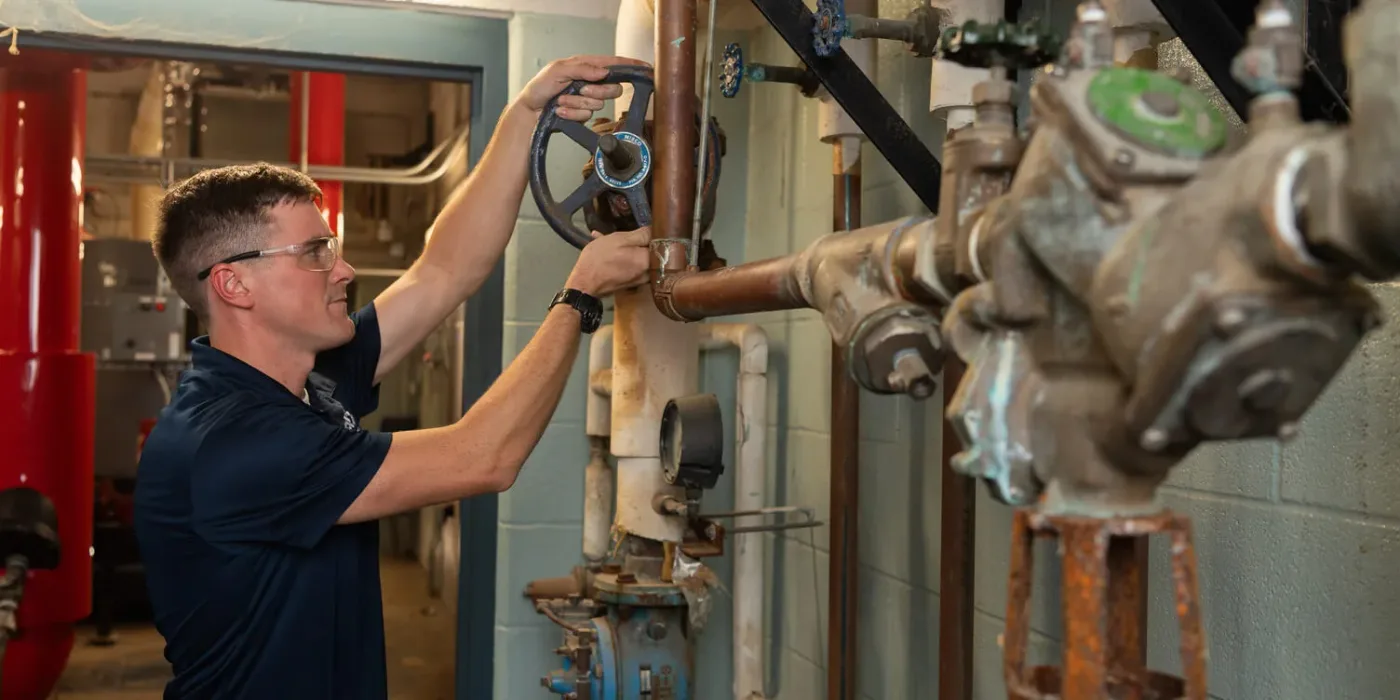

Workers compensation is the coverage for your own crew — the plumbers and helpers on your payroll, the people in the trench, in the crawlspace, and at the water heater. It is separate from every liability line on the shelf: it does not answer for the public or another contractor’s workers, but for the injuries your own people can suffer doing plumbing work. In most states it is also required by law once you have employees, and general contractors and building owners will ask for proof of it before they let your crew on the job.
Plumbing carries an injury profile that sets it apart, and it is why this coverage matters rather than being a box to check. Your crews go into open excavations to lay and repair sewer and water mains, into vaults and crawlspaces where the air and the space are the hazard, and up against hot water, steam, and a soldering flame every working day. This page covers the injuries workers compensation answers, the two parts of the policy — the no-fault benefit and the employers liability side — the four monopolistic state funds, the experience modification that rides on your claims history, and the seam where workers compensation stops and general liability begins.
The injuries a plumbing crew actually carries
Workers compensation is a no-fault system: when a crew member is hurt on the job, it pays medical treatment and a portion of lost wages regardless of who was at fault, and in exchange the employee generally cannot sue you over the injury itself. For a plumbing contractor the exposures that drive it are specific, and they sit at the more severe end of the trades:
- Trench and excavation collapse. Laying and repairing sewer and water lines puts your crews in open excavations, and an unshored or improperly sloped trench that collapses is among the most serious injuries a plumbing operation can suffer — a cave-in that buries a worker is a catastrophic loss, and it is what trench-protection procedure and the excavation code exist to prevent.
- Confined-space entry. Vaults, manholes, pits, crawlspaces, and tanks are confined spaces where the hazard is the space itself — a low-oxygen or contaminated atmosphere, engulfment, or no easy way out — and a plumber entering one for a repair faces a risk that has nothing to do with the plumbing and everything to do with the space.
- Scald and burn. Hot water and steam at a water heater or a supply line, and the flame and heat of soldering and brazing copper, put your crew a moment away from a scald or a burn — one of the more routine plumbing injuries, and a reason this class is not rated like a low-hazard office trade.
- Strains, falls, and the everyday. Handling pipe, fixtures, water heaters, and equipment in tight positions on occupied and under-construction sites carries the ordinary strains, slips, and falls of physical work — the claims that happen most often even when the severe ones do not.
These are the injuries the policy is built for, and the reason a plumbing operation is not underwritten like a business that keeps its people at a desk. The prevention side — trench protection and shoring, confined-space procedure, and burn and scald precautions — sits alongside the coverage, and it is also what shapes the experience modification described below.
Two parts: the no-fault benefit and employers liability
A workers compensation policy is really two coverages in one, and understanding both is part of buying it well. The first part is the no-fault benefit — the medical treatment and lost-wage payments an injured employee receives without proving fault, the core of the system. The second part is employers liability, and it is the one owners overlook. Employers liability responds when an injury leads to a suit against your business rather than a straightforward benefit claim — an action alleging your business is responsible for the harm, or a related claim that falls outside the no-fault bargain. It is the litigation side of the same event, and it sits in the same policy as the benefit.
Employers liability matters for a second reason: it is one of the underlying layers an umbrella policy sits excess of. When a project contract demands higher limits, the umbrella typically adds limit above your general liability, commercial auto, and employers liability together — so this part of your comp policy is part of the tower, not an afterthought. Making sure both parts are in place, and that the employers liability limit meets what your umbrella and contracts require, is structure we build before binding.
The four monopolistic states
Four states run their workers compensation differently, and a plumbing operation with crews in any of them has to handle it deliberately. In North Dakota, Ohio, Washington, and Wyoming, workers compensation is written only through a state-run fund — these are the monopolistic states, where a private carrier cannot write your workers compensation at all. You obtain the coverage directly from the state fund rather than a standard policy; that is not a matter of shopping the market, but how those four states run the system.
The practical catch is the employers liability part. Because the state fund provides the no-fault benefit but may not include employers liability the way a private policy does, contractors operating in these four states often need a separate stop-gap or employers-liability endorsement to answer the suit side the state fund can leave uncovered. If your crews cross state lines into or out of one of these four states, the arrangement has to be built so there is no gap between the state fund and the private coverage. We map which of your states run a monopolistic fund and make sure the stop-gap is in place where it is needed rather than discovered after a claim.
The experience modification
Workers compensation carries a mechanism most other lines do not: the experience modification, or experience mod. It is a factor that adjusts your cost up or down based on how your business’s claims history compares to other operations doing similar work. A record better than expected pulls the factor in your favor; a record worse than expected pulls it against you — and because it is built from several years of history and carries forward, a serious claim can affect your cost well after it has closed.
For a plumbing contractor that turns loss control into a business decision, not only a safety one: the same trench protection, confined-space procedure, and burn and scald precautions that keep your crew safe also shape the mod that rides on your claims history, and over time a cleaner record works in your favor on cost. It is worth understanding before you bid, too — general contractors on larger jobs sometimes set a maximum experience modification as a condition of the contract, so a poor record can cost you the account, not just the premium. We explain how the mod works and where it comes from; we do not put a number on it, because it is specific to your operation.
Where workers compensation stops: the general-liability seam
The single most important line to draw on this page is the one between your own crew and everyone else, because a plumbing owner who blurs it finds the gap during a claim. Workers compensation answers your own employees — the plumber in the trench, the helper in the crawlspace, the crew member scalded at a water heater. General liability answers third parties — the member of the public, the building owner, the tenant, or another contractor’s worker hurt around your work, and the property that is not yours. The two lines are written together and often sit with the same account, but they answer fundamentally different injuries.
The distinction is not always obvious on a jobsite where your crew, another trade’s crew, and the public are all in the same space. If your plumber is hurt when a trench collapses, that is workers compensation; if a passer-by or a general contractor’s worker is hurt around the same excavation, that is general liability. Same site, same event, two different lines — and getting the account structured so both are in place is exactly the work we do rather than leaving an owner to assume one policy covers everyone on the job.
Why plumbing contractors need it
Workers compensation is not optional for most plumbing operations: once you have employees, the great majority of states require it, and a general contractor or building owner will demand proof of it on a certificate before your crew sets foot on the site. Beyond the mandate, it matters because of the injury profile — a plumbing crew works in excavations, in confined spaces, and around hot water and flame, and this is the line that answers when a serious injury happens to one of your own people.
Because the exposure differs by the plumbing you do, the policy has to fit the operation. A Residential Plumbing contractor puts crews inside occupied homes for service and remodel work, with the scald, burn, and everyday-handling exposures of repair and install work. A Commercial Plumbing contractor adds the excavation and confined-space severity of commercial systems, new construction, and sewer and gas-line work at scale — deeper trenches, more vaults and confined spaces, and the additional-insured and experience-modification demands that come with commercial contracts. Rating both off one generic classification misprices the work; we classify each crew to what it actually does.
Limits and structure
Workers compensation is written on state-specific forms, and the benefit side follows the schedule each state sets — so the coverage is shaped by where your crews work as much as by what they do. The employers liability part carries its own limits, and those are the ones to line up with your umbrella and your contracts. Rating turns on your payroll, the classifications your crews are assigned to, and your experience modification, and in the four monopolistic states the coverage runs through the state fund with a stop-gap where the employers liability side needs it. Rather than quote a number, we classify your crews to the real work, handle the state-by-state and monopolistic-fund differences, and set the employers liability limit to match your umbrella and contracts.
Why Plumbing Guard Insurance
We are an independent agency that writes one class — plumbing contractors — and we place coverage with carriers that actually want the work. That focus is the point. We know to classify your crews to what they really do before we quote; to read the trench, confined-space, and scald exposures your operation carries; to handle the four monopolistic state funds and add a stop-gap where the employers liability side needs one; to explain the experience modification and where it comes from; and to line the employers liability limit up with the umbrella and the contracts your work depends on. When a general contractor sets an experience-modification cap in a contract, or a certificate request lands with workers-compensation requirements you do not recognize, that is a call we take. Start with a quote, or talk it through with us first.
Learn more
Coverage for a plumbing business works as a system. Workers compensation answers your own crew, while general liability answers the third parties who are not your crew and the completed-operations water damage on your finished work. Pollution liability answers the sewage and contaminant exposure the standard policy excludes, commercial auto the service trucks, contractors equipment your tools and machines, professional liability the design and consulting side, and umbrella liability adds limit above your general liability, commercial auto, and employers liability when a contract demands it. How it is written also differs by the plumbing you do across the two service pillars — Residential Plumbing Insurance and Commercial Plumbing Insurance.
Coverage for plumbing contractors
- General Liability Insurance
- Umbrella Liability Insurance
- Pollution Liability Insurance
- Commercial Auto Insurance
- Contractors Equipment Insurance
- Professional Liability Insurance
Insurance by the plumbing you do
Get covered
Primary sources
Frequently asked questions about Workers Compensation Insurance
What does workers compensation cover for a plumbing contractor?
Workers compensation covers injuries to your own crew — the plumbers and helpers on your payroll. It pays medical treatment and a portion of lost wages, on a no-fault basis, for an injury that happens on the job: a trench or excavation collapse, a confined-space incident in a vault or a crawlspace, a scald or a burn from hot water or a soldering torch, a strain from handling pipe and fixtures, or a fall. It is separate from general liability, which answers the people who are not your crew and the property that is not yours. Workers compensation answers your own people.
Does general liability cover an injury to my own plumber?
No — and this is the seam every plumbing owner should understand from the workers-compensation side. An injury to your own employee runs through workers compensation, not general liability. General liability answers third parties: a member of the public, a building owner, a tenant, or another contractor’s crew hurt around your work. Your own crew — the plumber in the trench, the helper in the crawlspace — is what workers compensation is built for. The two lines are written together and work together, but they answer different injuries: workers compensation for your people, general liability for everyone else.
What is employers liability, and how is it different from the no-fault benefit?
A workers compensation policy has two parts. The first is the no-fault benefit — the medical and lost-wage coverage an injured employee receives without having to prove your business was at fault. The second is employers liability, which responds when an injury leads to a suit against you rather than a straightforward benefit claim — an action that alleges your business is responsible for the harm, or a related claim brought outside the no-fault system. Both parts sit in the same policy, and the employers liability part is also the layer an umbrella policy can sit excess of. We make sure both parts are in place and structured for the work you do.
What are the monopolistic states, and how do they affect my coverage?
Four states — North Dakota, Ohio, Washington, and Wyoming — run their workers compensation on a monopolistic state fund. In those states a private carrier cannot write your workers compensation at all; the coverage comes only through the state fund, and you obtain it directly from the state rather than through a standard policy. That has a practical consequence: the state fund’s coverage may not include employers liability the way a private policy does, so contractors operating in those states often add a separate stop-gap or employers-liability endorsement to cover the gap. If your crews work across state lines into or out of these four states, the arrangement needs to be handled deliberately, which is part of what we sort out before binding.
What is an experience modification, and why does it matter?
The experience modification — the experience mod — is a factor that adjusts your workers compensation cost up or down based on how your business’s claims history compares to others doing similar work. A record better than expected pulls the factor one way; a worse record pulls it the other, and it carries forward, so a serious claim can affect your cost for years after it closes. For a plumbing contractor that makes loss control a business decision, not just a safety one: trench protection, confined-space procedure, and burn and scald precautions reduce injuries and, over time, the factor that rides on them. We describe how the mod works and where it comes from; we do not quote a number, because it is specific to your operation.
How is workers compensation priced for a plumbing crew?
Workers compensation is written on state-specific forms and rated on a classification system — in most states the National Council on Compensation Insurance system, and in a handful of others an independent state bureau. Your payroll is assigned to classifications that reflect the work your crews actually do, and the rate for each classification, your payroll in it, and your experience modification drive the cost. The specifics vary by state, and getting your crews classified correctly to the work they perform is part of writing the policy accurately rather than over- or under-stating the exposure. We handle the classification and the state-by-state differences so the policy reflects the real operation.
Get workers compensation built around your crew
Tell us whether you run residential service and remodel or commercial systems and new construction, and we will market it to carriers that write the class — with the trench, confined-space, and scald exposures classified correctly and the monopolistic states handled, not assumed.