Plumbing insurance by state
Plumbing Contractor Insurance in California
California licenses plumbing not as a plumber’s card but as a CSLB C-36 contractor classification — a business license earned on years of journeyman experience — and sets it to work over ground that moves. Seismic risk to buried and under-slab lines, plus heavy rainfall and groundwater loading on drainage, define the exposure, and a California plumbing program is built around both.
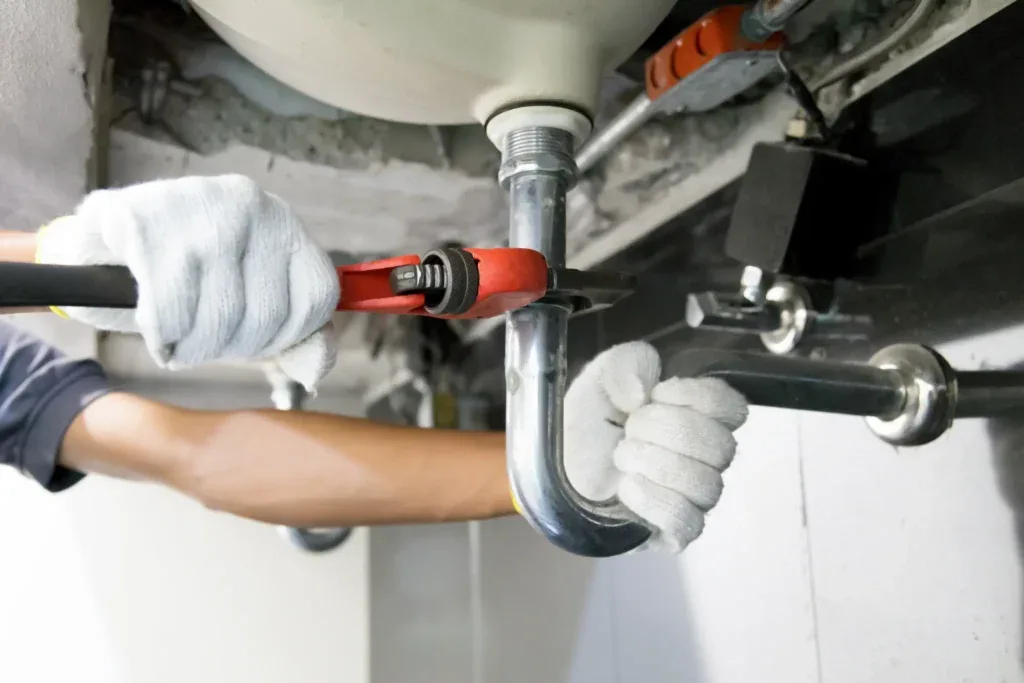

Plumbing in California is defined by ground that does not hold still. Seismic movement stresses the buried supply lines, under-slab piping, and building connections a plumber installs and repairs, and a line disturbed today can fail under a finished floor months later and flood the space. Layered on top is heavy seasonal rainfall and groundwater loading on drainage, and hard water across much of the state that fouls fixtures, valves, and water heaters. The regulatory frame is distinct too: California does not issue a plumber’s card — it licenses a C-36 contractor classification through the CSLB, a business license earned on journeyman experience. Put the moving ground and the contractor-classification structure together and a California plumbing program carries a shape a generic business policy never anticipates.
This page walks the California-specific realities a plumbing program has to answer for: the seismic and drainage exposures, the CSLB C-36 licensing picture, the claims we see, what drives cost here, and the major markets across the state. The coverage lines themselves — general liability, pollution liability, workers compensation, commercial auto, contractors equipment, umbrella, and professional liability — are covered on their own pages; here the focus is how California changes the emphasis.
Common Plumbing Risks in California
Seismic risk to buried and under-slab lines, plus high rainfall and groundwater loading on drainage, shape the exposure on both new systems and repair work. Those forces, plus the sewer and gas work a large state generates, drive the exposures underwriters key on:
- Seismic buried-line failure. A supply or drain line disturbed by ground movement that later fails under a finished slab and floods the space — the distinctive California version of the completed-operations water-damage claim, answered by the carrier under general liability.
- Drainage and groundwater loading. Heavy rainfall on hillside and canyon drainage stresses the systems a plumber installs, raising the completed-operations exposure on new work.
- Sewage and contaminant release. On drain and sewer work, a backup or release the standard general liability policy carves out through its pollution exclusion — answered by pollution liability, a distinct line.
- Trench, confined-space, and scald injury. The workers-compensation exposure that shapes a plumbing crew’s injury profile, enforced tightly through the CSLB in California.
California Plumbing Regulations & Licensing
California licenses plumbing contractors through the Contractors State License Board under the C-36 Plumbing classification; applicants need four years of journeyman-level experience and pass trade and law-and-business exams.
The practical effect for a plumbing program is that in California the C-36 license and the certificate of insurance work together, and the state ties the two more tightly than most: the CSLB links license status to workers-comp compliance for many contractors, so the coverage is not just a contract requirement but part of holding the license. On top of that, the general contractor, developer, or building owner leans on your coverage, your limits, and your additional-insured endorsements to decide whether to let you on the job — which is why the general liability program and its endorsements matter so much here.
The workers-comp picture. California is a private-market workers compensation state — coverage is written by private carriers and is mandatory for most employers with employees. For a plumbing crew exposed to trench, confined-space, and scald hazards, comp is a core line, and how the class is rated and managed is worth getting right. We walk the class through against your crews and your contracts on the workers compensation page rather than treating it as fine print, and we keep the CSLB comp requirement in view.
Common California Plumbing Claims We See
Described qualitatively, with generic carrier language — every claim is handled by the carrier, never named here, and with no fabricated figures:
- The buried-line water loss. An under-slab or buried line, stressed by ground movement, that fails and floods a finished space — a completed-operations claim the carrier answers under general liability, and the California signature.
- The sewer-work release. A backup or contaminant release during drain or sewer work that the general liability pollution exclusion carves out — the claim a pollution liability line is built to answer.
- The scale-driven failure. A treatment, softener, or water-heater installation that fails from hard-water scale and damages a finished space — a completed-operations question the carrier weighs on the liability side.
What Plumbing Contractor Insurance Costs in California
There is no single California price, because premium is driven by your operation, not your ZIP code alone. The cost drivers that matter most here:
- Payroll and crew classifications. Payroll is the base the workers-compensation exposure is rated on, and California’s tight comp enforcement makes getting the class right unavoidable.
- Repipe and slab-leak volume. A book heavy on under-slab and seismic-adjacent repair work carries a deeper completed-operations water-damage tail than a light service operation.
- The work mix. Residential service and remodel, commercial systems and new construction, and drain, sewer, or gas work each carry a different completed-operations and pollution profile, and each prices differently.
- Contract requirements. The additional-insured and higher-limit terms California general contractors demand raise the weight on the general liability and umbrella program.
- Claims history and fleet. Prior losses, plus your service-truck count, values, and mileage across a large state, both move the number.
We price to the real operation rather than quoting a figure off the state name.
Why California Plumbers Choose Plumbing Guard Insurance
We write one class — plumbing contractors — and we place coverage with carriers that actually want the work. In California that focus shows up in the questions we ask before we quote: how much of your book is under-slab and repipe work on ground that moves, with its completed-operations tail; whether your comp is set up the way the CSLB requires to keep your C-36 in good standing; whether you do drain, sewer, or gas work and carry the pollution exposure the standard policy excludes; and whether your general liability carries the completed-operations and additional-insured terms a California general contractor will demand alongside your license. When a certificate request lands on your desk with requirements you do not recognize, that is a call we take.
Major California Plumbing Markets
California is not one plumbing market but several, each with its own exposure and operating profile:
Los Angeles
The state’s densest plumbing market runs older buildings on seismic ground with hard water throughout the basin, so repipe, slab-leak repair, and seismic gas-shutoff work stack up — a completed-operations water-damage book where a line disturbed by ground movement fails under a finished floor long after the job.
San Diego
A coastal-and-canyon market where hard water, hillside drainage, and steady new multi-family construction drive both treatment-and-replacement work and new-system completed-operations exposure, alongside the additional-insured demands of general-contractor jobs on high-value coastal projects.
San Jose and the Bay Area
A high-cost, high-value market on some of the most seismically active ground in the state, where commercial and tech-campus mechanical work and dense multi-family carry large contract values, wrap-up requirements, and the buried-line seismic exposure that follows the fault system.
Sacramento
A Central Valley capital market where clay-and-alluvial soils, delta-adjacent groundwater, and steady residential growth put weight on under-slab and drainage work — a slab-leak and repipe book with the completed-operations tail that pattern creates.
Fresno and the Central Valley
An agricultural and fast-growing market where hard water, well-and-treatment work, and new-construction volume shape the book, and a scale-driven failure on completed treatment or supply work becomes a completed-operations question rather than a simple callback.
Related reading
Coverage for a California plumbing business works as a system. The lines that carry the most weight here are general liability (completed-operations water damage on buried and under-slab work) and pollution liability (the sewer and contaminant exposure the standard policy excludes), alongside workers compensation (tied to the CSLB license), commercial auto, contractors equipment, umbrella liability, and professional liability for design and consulting work. How the program is written also differs by the plumbing you do across the two service pillars.
Coverage for California plumbers
- General Liability Insurance
- Pollution Liability Insurance
- Workers Compensation Insurance
- Commercial Auto Insurance
- Contractors Equipment Insurance
- Umbrella Liability Insurance
- Professional Liability Insurance
The plumbing you do
Get covered
California sources
Frequently asked questions about plumbing insurance in California
Do plumbers need a license in California?
Yes, but California licenses the business, not the individual card. Plumbing is licensed through the Contractors State License Board under the C-36 Plumbing classification; the qualifying individual needs about four years of journeyman-level experience and passes trade and law-and-business exams. That contractor-classification structure means the license a general contractor checks is a CSLB C-36 — and the certificate of insurance is checked right alongside it. We build the insurance program to sit with that C-36 license rather than in place of it.
Why does seismic risk matter to a California plumbing program?
Because ground movement stresses exactly what a plumber installs and repairs: buried supply and drain lines, under-slab piping, and the connections between a building and its service. A line disturbed by seismic movement can fail under a finished floor and flood the space long after the job — which makes it a completed-operations exposure on the general liability side rather than a simple callback. A California program is built with that buried-line, discovered-later pattern in mind, on top of the ordinary water-damage exposure the trade carries everywhere.
Does a California plumbing business have to carry workers compensation?
California is a private-market workers-compensation state — coverage is written by private carriers and is mandatory for most employers with employees. For a plumbing crew working in trenches, in confined spaces, and around scald and burn hazards, comp is a core line, and California enforces the requirement tightly through the CSLB, which ties license status to comp for many contractors. Many general contractors also require comp on a certificate regardless. We read the class against your actual crews and your contracts rather than treating it as a box to check.
How much does plumbing contractor insurance cost in California?
There is no single price, because premium is driven by your operation. In California the biggest factors are your payroll and crew classifications, your split of residential service and remodel versus commercial and new construction, your repipe and slab-leak volume, whether you do drain, sewer, or gas work, your service-truck count and values, and your prior claims history. A Los Angeles repipe shop, a Bay Area commercial contractor, and a Central Valley treatment-and-service operation each look very different to an underwriter, so we price to the real operation rather than a figure off the state name.
What coverage carries the most weight for a California plumber?
General liability leads, because the completed-operations water damage from a failed connection — often on ground that has moved — is the claim this trade turns on, and because California general contractors lean hard on additional-insured endorsements and higher limits. Pollution liability answers the sewer and contaminant exposure the standard policy excludes. Commercial auto covers the service fleet, contractors equipment covers the tools and sewer cameras, umbrella supplies the higher limits large jobs demand, and professional liability answers the design and consulting side of the work.
Do you write plumbing insurance across all of California?
Yes. Plumbing Guard Insurance places coverage for plumbing contractors across California — from the Los Angeles and San Diego coastal markets to the San Jose Bay Area, Sacramento, and the Fresno Central Valley — and across the rest of the 48 states we serve. We write residential service and remodel plumbers and commercial and new-construction contractors, matched to how the operation actually runs in its part of the state.
Get a quote for your California plumbing business
Tell us where in California you work, how your comp is set up under the CSLB, and the plumbing you do — and we will market it to carriers that write the class.