Insurance by market segment
Residential Plumbing Insurance for Service and Remodel Contractors
Insurance for the plumbing contractor who serves homeowners — leak repair, water heaters, water softeners, drain cleaning, and bathroom and kitchen remodels. The occupied-space service segment, where a connection that fails after the job and floods a finished home, and a crew working around people, finishes, and possessions, drive the risk profile.
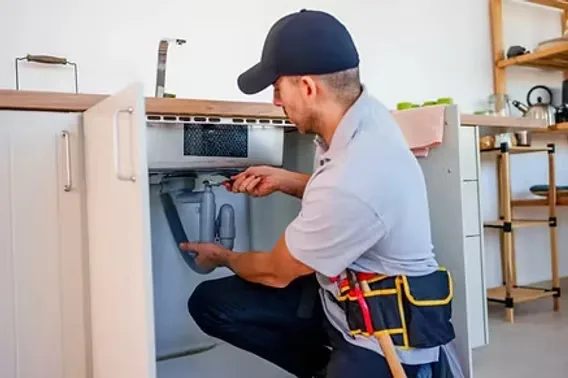

Picture the loss that defines this segment: a fitting, a connection, a valve, or a supply line you installed or repaired lets go after the job is finished, and water spreads through a finished, furnished, lived-in home — soaking flooring and cabinetry, ruining belongings, and running down into the room below. The crew has long since packed up and moved on, final payment has cleared, and the failure surfaces weeks or months later in a part of the home nobody was watching. That is the completed-operations exposure at its most vivid, and it is the reason a residential plumbing operation needs coverage built around the work it leaves behind, not a generic business policy.
The second half of the picture is where the work happens. Residential service and remodel plumbing is done inside occupied homes — around people, around finished floors and walls and cabinetry, and around the possessions a family lives with every day. A leak repair, a water heater swap, a softener install, a drain-cleaning call, or a bathroom remodel all put a crew in a customer’s space, reaching into crawlspaces and working close to finishes that damage easily. The two exposures together — the completed-operations water damage behind the crew and the occupied-home operations reality in front of it — are what a residential plumbing program has to be built around.
This page covers how residential plumbing insurance is built for the occupied-space service and remodel segment: what makes it distinct, the work it covers, the state and regulatory picture, the coverage stack it leans on and the order it leans on them, the drivers that move cost, and how carriers underwrite it. Residential plumbing does not lead with the commercial systems-and-scale exposure, the backflow-program regime, or the larger additional-insured and wrap-up demands that define the Commercial Plumbing segment — where a job crosses over into commercial systems or new construction, that page is built for it.
Serve homeowners? Get a quote structured around the connections you leave behind and the crew inside the home.
Get a Free QuoteWhat makes residential plumbing insurance different
Residential plumbing risk is completed-work risk and occupied-home risk, and it lands in places a generic business policy does not anticipate. The first is the completed-operations exposure — the connection you finish keeps holding pressure long after you leave, and a failure in it can surface as a serious third-party water-damage claim in a finished home a season or years later, which is why the products-completed operations side of general liability is the line this segment leans on hardest. The second is the occupied-home operations exposure — a crew working inside a customer’s home, in crawlspaces and around finishes and belongings, carries a third-party and injury profile that a warehouse or a storefront business simply does not. A policy rated to a light-trade or general-business risk treats neither with the emphasis a residential plumber needs.
The work is also intimate and high-touch in a way that sharpens both exposures at once. Because every job is inside someone’s living space, a small mistake becomes a visible loss fast — a fixture that overflows onto a finished floor, water tracked across carpet, a wall damaged pulling a vanity — and because the finished connection is left behind to perform for years, the completed-operations tail follows the crew home from every call. Two contractors with similar revenue can carry very different exposures depending on how much water-heater and gas work they do, how much drain and sewer work is on the books, and how much of the schedule is remodel versus quick service, so we separate those and weight the stack toward the lines the residential model actually leans on.
The work this covers
The residential model holds several kinds of work that share one risk profile — service and remodel plumbing performed inside occupied homes, with finished connections left behind to hold pressure for years. These are the work types that live within this pillar:
- Leak repair and service calls. The core of the residential trade — fast-turn diagnostic and repair work inside occupied homes, where the crew works around finishes and belongings and every finished repair joins the completed-operations tail.
- Water heater install and repair. Tank and tankless work that ties into supply lines and, on gas units, into fuel connections — a completed-operations exposure on the connection and a scald and gas-severity exposure on the appliance.
- Water softener and filtration. Softener and filtration systems plumbed into the home’s supply, where a fitting or a connection that later fails can flood a finished mechanical space or the room below.
- Drain cleaning and repair. Clearing and repairing drains and waste lines inside occupied homes — the work that carries a sewage and contaminant exposure the standard general liability policy carves out to a separate line.
- Bathroom and kitchen remodels. The larger residential job — moving and re-plumbing supply and waste lines in a finished home, where the volume of new connections, the finish work around them, and the property exposure all rise together.
Commercial systems, new construction, backflow-prevention programs, gas lines at scale, and multi-unit and tenant work are not the center of this model — that concentration, with its larger contract values and additional-insured and wrap-up demands, lives on the Commercial Plumbing page. A contractor whose work crosses that line gets each scope underwritten on its own terms.
State and regulatory considerations
What shapes residential plumbing risk by location is licensing, worker safety, and workers compensation. Licensing varies genuinely from state to state, and plumbing is among the most-licensed trades: many states license plumbers directly through a state plumbing or contractor board, often with journeyman and master tiers; some cover the work under a broader contractor license; and some defer to local jurisdictions for registration and permitting. Because it varies this much, we do not generalize a single rule or invent a code — we point each contractor to their own state and local authority and structure the coverage around what the jurisdiction and the contracts actually require. Worker safety on a plumbing job — confined-space entry in crawlspaces and vaults, excavation and trenching where service work reaches a buried line, and the hot-water and gas-appliance hazards of water-heater work — runs through OSHA standards, and a documented safety program is something carriers look for.
Workers compensation rules also vary by state, including the four monopolistic states — North Dakota, Ohio, Washington, and Wyoming — where coverage comes only through the state fund, which matters for a crew that works across a state line or for an owner running in more than one state. Because a residential crew works inside occupied homes and crawlspaces, the workers-compensation picture carries real weight, and the detail lives on the workers compensation page. As our state pages come online we link the licensing, worker-safety, and workers-compensation specifics for the states we serve. We write across all 48 licensed states.
Coverage breakdown
Here is the stack a residential plumbing contractor carries, in the order this segment leans on it. General liability leads — it carries the completed-operations exposure on the connections you leave behind in a finished home — with workers compensation close behind for the crew inside occupied homes and crawlspaces. Each line links to its full page.
- General Liability Insurance — the signature line: third-party bodily injury and property damage from the operation, and the completed-operations side that answers when a fitting, connection, or valve you installed fails downstream and floods a finished home after the job is done. The occurrence-versus-claims-made trigger and the additional-insured endorsements a contract requires are worked out on that page.
- Workers Compensation Insurance — medical and lost-wage coverage for a crew working inside occupied homes and crawlspaces, with employers liability and honest handling of the monopolistic state-fund states. Scald and burn, confined-space, and the everyday strains of service work sit here, which is why this line sits second only to general liability for the residential model.
- Commercial Auto Insurance — the service trucks and vans that run between the shop and the jobsite hauling plumbers, tools, fixtures, and material — the mobile, truck-roll trade of a residential operation making calls all day, plus the hired and non-owned exposure when extra drivers are on the road.
- Contractors Equipment Insurance — the inland-marine line for the hand tools, pipe threaders, sewer cameras, pipe locators, drain machines, and the fixtures staged for the next install, on the jobsite and in transit, where tools and material are exposed to theft and damage away from the shop.
- Pollution Liability Insurance — the line for the sewage backup or release and the contaminant discharge that drain and sewer work can cause, which the standard general liability pollution exclusion carves out — the reason a residential shop doing drain work needs this alongside general liability rather than assuming one covers the other.
- Umbrella Liability Insurance — excess limits above general liability, commercial auto, and the other primary lines for the catastrophic loss that runs past them, and the higher limits a general contractor, property manager, or project contract sometimes requires of a plumbing subcontractor.
- Professional Liability Insurance — errors-and-omissions coverage for the design, specification, and consulting side of the work, where a professional judgment that causes purely financial loss is a different exposure than the faulty-workmanship claim general liability answers. The seam between the two is drawn on that page.
What residential plumbing insurance costs
Premium tracks the operation, not a sticker price. The drivers that move it most are your payroll and the crew classifications it covers, the mix of quick service, repair, and remodel in your book, how much water-heater and gas-appliance work you do, how much drain and sewer work is on the schedule and the pollution exposure it carries, the depth of your completed-operations exposure on the connections you leave behind, your service trucks and their values, the tools and equipment you own, your contracts and any additional-insured and limit requirements they carry, your prior-claims history, your multi-state footprint, and your safety and workmanship-documentation discipline. A remodel-heavy shop moving and re-plumbing lines in finished homes carries a different profile than a light service-and-repair operation, and a documented workmanship-QA and safety program moves the picture in your favor. We price to that real operation and stand behind any figure we give — verified ranges come from us directly, never a generic guess.
Claims scenarios
These are plausible residential-plumbing claim categories, described qualitatively and with generic carrier language — every claim is handled by the carrier, never named here — and with no fabricated cost or frequency figures.
- A connection fails and floods a finished home. A supply line or fitting on a water heater or softener you installed lets go a season later, sending water through the finishes and into the room below — the completed-operations side of general liability, the signature residential exposure.
- A crew member is scalded or hurt in a crawlspace. A worker is burned by hot water or a gas appliance, or injured entering a confined crawlspace on a service call — the injury profile that makes workers compensation a core line for a crew inside occupied homes.
- Property damage during a service call. Water tracked across a finished floor, a fixture that overflows during a repair, or a wall damaged pulling a vanity — a premises-and-operations general-liability claim on property that is not yours.
- A drain job pushes sewage into a finished space. A drain-cleaning or sewer call sends a sewage backup or contaminant release into a finished basement — the pollution exposure the standard general liability policy carves out to pollution liability.
- Tools stolen off a job. A sewer camera, a pipe locator, a drain machine, or a load of fixtures staged for the next install is stolen or damaged on the site or in transit — a contractors equipment claim, not general liability.
Underwriting realities
Carriers writing the residential plumbing class look at the work and the discipline: the mix of service, repair, and remodel in your book, how much water-heater and gas-appliance work you do, how much drain and sewer work you take and the pollution exposure it carries, the depth of your completed-operations exposure, your crew payroll and classifications, your confined-space and hot-work safety practices, your workmanship-documentation and callback record, your prior-claims history, your use of subcontracted labor, and your multi-state footprint. A focused operation with a clean claims history, documented workmanship QA, and controlled safety practices opens more markets; an uncontrolled book with a serious completed-operations water-damage loss or a bad injury narrows them. We position your operation to the carriers most likely to want a residential plumbing risk rather than sending one generic submission everywhere.
Why Plumbing Guard Insurance
We write one class — plumbing contractors — and within it we treat residential service and remodel as the market segment it is. We weight your stack toward the completed-operations exposure on the connections you leave behind in a finished home and the injury exposure a crew working inside occupied homes and crawlspaces actually carries, draw the pollution seam so a drain and sewer job’s sewage exposure is answered rather than assumed, and set commercial auto, contractors equipment, and the umbrella around the way a residential plumber really operates. We place coverage with carriers that want the residential plumbing class. Start with a quote, or talk it through with us first.
Learn more
Residential plumbing is one of two market segments we write, and the coverage stack shifts with the work. The signature exposure for this segment lives on the general liability page, with workers compensation close behind for the crew inside occupied homes and pollution liability for the sewage exposure drain and sewer work carries. If your work runs to commercial systems, new construction, backflow-prevention programs, or multi-unit and tenant jobs, the Commercial Plumbing Insurance page leads with that systems-and-scale concentration.
Coverage for plumbing contractors
- General Liability Insurance
- Workers Compensation Insurance
- Commercial Auto Insurance
- Contractors Equipment Insurance
- Pollution Liability Insurance
- Umbrella Liability Insurance
- Professional Liability Insurance
Insurance by market segment
Get covered
Primary sources
Frequently asked questions about Residential Plumbing Insurance
What insurance does a residential plumbing contractor need?
A residential plumbing contractor typically carries general liability, workers compensation, commercial auto for the service trucks, contractors equipment for the tools and staged fixtures, and an umbrella as its core stack, with pollution liability where drain and sewer work is on the books and professional liability where the work includes design or specification. The weight sits differently than for a general business: because the connections you make keep holding pressure long after you leave a finished home, the completed-operations side of general liability is the signature line, and because the crew works inside occupied homes — in crawlspaces, around water heaters, and near finishes and belongings — workers compensation is a core line rather than a formality. We build the stack around the occupied-space service and remodel model rather than a generic business policy.
Does general liability cover water damage from a leak after I finish a job in a home?
That is the completed-operations side of general liability, and on residential service and remodel work it is the exposure that matters most. The standard commercial general liability policy responds to third-party bodily injury and property damage arising out of your work away from your premises, after the work is complete — for a contractor, the finished installation is your work, so a supply line, a fitting, or a valve that lets go a season later and floods a finished, furnished space, ruining finishes, belongings, and the room below, is the kind of third-party claim the products-completed operations hazard is built for. The occurrence-versus-claims-made trigger matters here because a slow leak can surface long after final payment, and the full mechanics live on the general liability page.
How does workers compensation work for a crew inside an occupied home?
A plumbing crew that spends its day inside customers’ homes — reaching into crawlspaces, working around water heaters, and handling drain and repair work in tight finished spaces — carries the injury profile that makes workers compensation a core line for this segment. Workers compensation covers an injured crew member’s medical care and lost wages, and the employers-liability side answers the lawsuit. A scald or burn from hot water or a gas appliance, a confined-space incident in a crawlspace or a vault, and the everyday strains of service work all sit here rather than on general liability, which answers third parties. Comp also follows your payroll, so where your crew physically works matters, including the four monopolistic states — North Dakota, Ohio, Washington, and Wyoming — where coverage comes only through the state fund. The severity and rating detail lives on the workers compensation page.
I work in occupied homes around finishes and belongings — how does that change my coverage?
Working in a lived-in home is the operational signature of this segment, and it sharpens the third-party exposure. Every job happens around a customer’s floors, walls, cabinetry, and possessions, so water tracked across a finished floor, a fixture that overflows during a service call, or a tool that damages a finished wall becomes a third-party property-damage claim on property that is not yours — the premises-and-operations side of general liability. Faster jobs in more homes also deepen the completed-operations tail behind the crew, because each finished connection has to keep holding pressure after you leave. We read how your service and remodel operation actually runs so the coverage is weighted toward the lines an occupied-home plumber leans on, rather than a flat general-business policy.
Does residential plumbing insurance cover the property owner’s water damage?
This is coverage for the plumbing contractor, not for the property owner — the distinction is the whole point. A residential plumbing policy answers the contractor’s liability and the contractor’s risk: the third-party bodily injury and property damage your work can cause, the crew injured on the job, the service trucks, and the tools. It is not a policy on the building or its contents. When a connection you installed fails downstream and floods a finished space, general liability responds to the contractor’s liability for that third-party harm; the property owner deals with their own carrier separately. We insure the business that serves homeowners, and we frame every exposure as the contractor’s.
Do I need a license to do residential plumbing work?
It depends on the state, and plumbing is among the most-licensed trades, so it is worth getting right rather than assuming. Many states license plumbers directly through a state plumbing or contractor board, often with journeyman and master tiers; some cover the work under a broader contractor license; and some defer to local jurisdictions for registration and permitting. Because the requirement varies this much, we do not generalize a single rule or invent a code — we point you to your own state and local licensing authority and structure the coverage around what your jurisdiction and your contracts actually require. As our state pages come online we link the licensing and workers-compensation specifics for each state we serve.
Plumbing Contractor Insurance by State
We write residential plumbing contractors in all 48 licensed states. Pick your state for the local licensing, workers-compensation, and coverage picture.
- Alabama
- Arizona
- Arkansas
- California
- Colorado
- Connecticut
- Delaware
- Florida
- Georgia
- Idaho
- Illinois
- Indiana
- Iowa
- Kansas
- Kentucky
- Louisiana
- Maine
- Maryland
- Massachusetts
- Michigan
- Minnesota
- Mississippi
- Missouri
- Montana
- Nebraska
- Nevada
- New Hampshire
- New Jersey
- New Mexico
- New York
- North Carolina
- North Dakota
- Ohio
- Oklahoma
- Oregon
- Pennsylvania
- Rhode Island
- South Carolina
- South Dakota
- Tennessee
- Texas
- Utah
- Vermont
- Virginia
- Washington
- West Virginia
- Wisconsin
- Wyoming
Insure your residential plumbing operation the way it runs
Tell us the service and remodel work you do, the crew you run inside homes, and the drain and gas work on your books, and we will market it to carriers that write the residential plumbing class — with completed-operations water damage and the crew exposure covered, not assumed.