
Coverage line
Pollution Liability Insurance for Plumbing Contractors
The line that answers for the exposures at the heart of drain, sewer, and gas work — a sewage backup or release, a contaminant discharge, a fuel or gas incident — the pollution the standard general liability policy carves out through its pollution exclusion. It is the coverage that defines this trade.
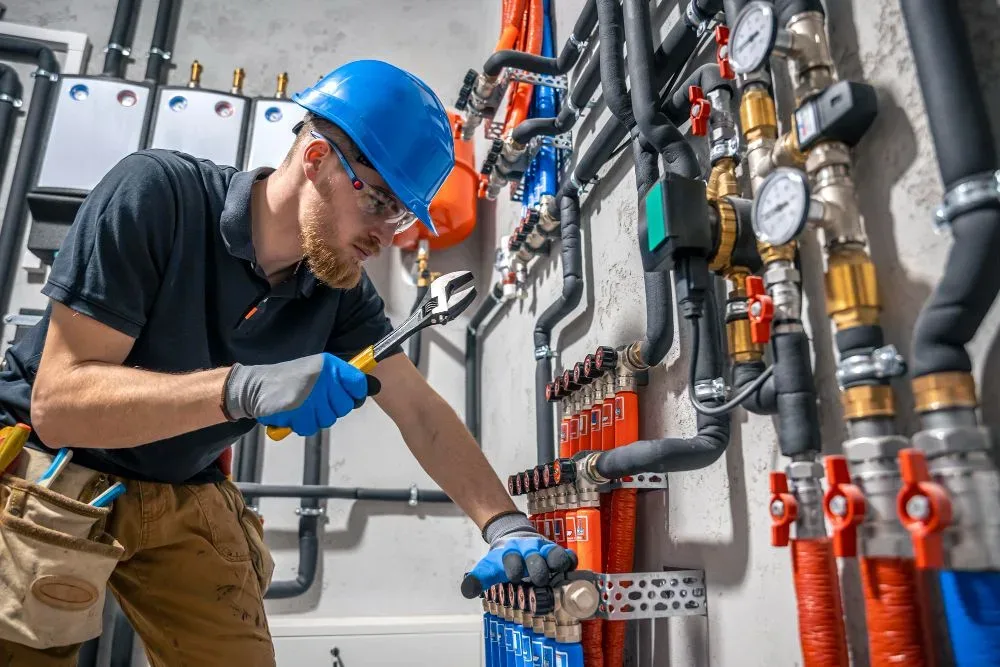

Pollution liability is the coverage that answers for the release of a pollutant that arises out of your plumbing work — the sewage that backs up during a sewer job, the contaminant that discharges on the site, the fuel or gas that gets loose. It is the line that sits on the other side of a wall the standard general liability policy builds on purpose, and for a plumbing contractor it is not a peripheral coverage. The work that defines the trade — drain and sewer work, backflow and cross-connection work, and gas-line work — is the work most likely to release the very substances the general liability policy leaves out.
That is why this is a signature line for a plumbing business rather than an afterthought. The general liability policy answers for the water damage a failed connection causes and the third-party harm your operation can do; it does not answer for a sewage backup, a contaminant discharge, or a fuel or gas release, because its pollution exclusion carves those out. This page states the pollution side of that seam at depth: why the line exists, the three exposures it is built for, the honest shapes the coverage takes — sudden-and-accidental versus gradual, jobsite versus completed operations, first-party cleanup versus third-party liability — and the seams where pollution liability stops and its neighbors begin.
Why this line exists: the pollution exclusion
The reason a plumbing program needs a separate pollution line comes down to how the standard general liability policy is deliberately built. The commercial general liability coverage form most policies start from — typically the occurrence-based form known as CG 00 01 — carries a pollution exclusion in its Coverage A. That exclusion carves out bodily injury and property damage that arise out of the discharge, dispersal, seepage, migration, release, or escape of a pollutant. Sewage, contaminants, and fuel or gas all fall squarely on the excluded side of that line.
Read that against the work a plumbing contractor actually does and the problem is obvious: the exposures the general liability policy excludes are the exposures the trade creates most. A sewer contractor who clears a main and pushes a backup into a finished space, a drain crew whose work releases a contaminant, a gas fitter whose line lets loose — these are the losses the standard policy was drafted to leave out. That is not a gap in a badly written policy to be argued around after a loss. It is the standard form working as designed, and the honest response is a separate line built for the exposure rather than a hope that the general liability policy will stretch to reach it.
The signature exposure (1): sewage backup and release
The exposure that defines this line for a plumbing contractor is sewage. Drain and sewer work puts your crew and your completed work directly in the path of the substance the general liability policy most clearly excludes, and a sewage release can turn into a serious loss for the people and property it reaches. A main you clear that backs up into a finished basement, a line you repair that releases into a building, a sewer job where the flow escapes onto a neighboring property — these are the sewage-release scenarios pollution liability is built for, and they are the everyday reality of sewer and drain work rather than a rare event.
What makes sewage more than an ordinary property-damage loss is what it is. A sewage release is not clean water; it is a contaminant, which is precisely why the general liability policy excludes it and why it needs its own line. The harm runs past the immediate water damage to the contamination and the cleanup that a release demands, and pollution liability is written to respond to that — the third-party bodily injury and property damage a sewage release causes, and, depending on the wording, the cost of cleaning it up. For a contractor whose book includes sewer and drain work, this is the exposure that makes the line indispensable rather than optional.
The signature exposure (2): contaminant discharge
Beyond sewage, plumbing work can discharge other contaminants, and pollution liability is the line that answers for them. Backflow and cross-connection work exists precisely because a plumbing system can let a contaminant into a potable supply if a connection is wrong — the exposure the whole discipline of backflow prevention is built to stop. A cross-connection that lets a contaminant into a water supply, a discharge of a chemical or a contaminant during the work, a release from your operation that reaches soil, water, or a building — these are pollution exposures the general liability policy carves out and the pollution line is built to answer.
The point a contractor has to hold onto is that a contaminant discharge is a pollution event even when it does not look like the stereotype of pollution. It does not take a spill of an industrial chemical; a cross-connection that introduces a contaminant into a potable line is a release of a pollutant in the eyes of the general liability exclusion, and it lands on the pollution side of the seam. Reading whether your coverage reaches the contaminant exposures your specific work creates — sewer, drain, backflow, or otherwise — is exactly the work of matching the policy to the operation.
The signature exposure (3): fuel and gas incidents
The third exposure sits with the contractors who do Commercial Plumbing work and gas-line work, and it is where the pollution line and the severity end of the operation meet. A fuel or gas release — a line that leaks, a connection that fails, fuel that escapes on the job — is a pollution event, because gas and fuel are pollutants the general liability policy excludes just as it excludes sewage and contaminants. Pollution liability is the line written to answer for the release itself.
It is worth drawing this next to general liability rather than blurring the two. The golden general liability page treats gas-line severity as the operations exposure where a failure can lead to fire or explosion — third-party bodily injury and property damage of the most serious kind — and that side sits with general liability. The release of the fuel or gas as a pollutant, and the contamination and cleanup that a release brings, sits with pollution liability. A gas program can touch both lines, which is exactly why a plumbing contractor doing fuel or gas work should carry them together and understand where each one answers rather than assume a single policy reaches the whole exposure.
The shapes the coverage takes
Because pollution coverage is not a single standard form, its shape varies, and a contractor has to read the wording rather than assume it. Three distinctions decide what a given policy actually answers for, and each one is a wording question we walk owners through before binding.
Sudden-and-accidental versus gradual. This is about how the release happens over time. A sudden-and-accidental release is an abrupt event at an identifiable moment — a line lets go, a backup happens. Gradual pollution seeps or builds undetected before anyone finds it — a slow release that surfaces later, much like the long tail of completed water-damage work the general liability page describes. Some coverage answers only the sudden-and-accidental event; broader wording reaches gradual pollution too. A plumbing contractor can face both, so which the policy covers is a distinction to settle before a loss.
Jobsite versus completed operations. A pollution release can happen while your crew is on the job, or it can happen from your completed work after the crew has left — a connection or a line that releases a contaminant or gas long after the job is done. Just as general liability separates ongoing operations from completed operations, pollution wording can treat the two differently, and for a plumbing contractor with a long completed-work tail the completed-operations pollution reach matters.
First-party cleanup versus third-party liability. Third-party liability answers the harm and the cleanup others are owed when your work releases a pollutant onto their property or into the environment. First-party cleanup answers your own cost to remediate a release. Some coverage reaches both; some reaches only the third-party side. Which one a policy carries is the distinction most often misread, and it is a difference that decides who pays to clean up a release.
A largely manuscript line — and why the wording matters
Here is the honest point that governs this whole page, stated plainly because a plumbing contractor deserves it straight: contractors pollution coverage is largely non-standard. Where general liability is built from a standard industry coverage form that most policies share, pollution coverage for contractors is largely manuscript — carrier-specific wording that varies meaningfully from one market to the next. There is no single industry form that governs it the way the standard general liability form governs that line, which is why this page describes the coverage in concepts and does not name a pollution form number: there is no one number to name honestly.
That is not a reason to skip the line; it is the reason to read it carefully. What a given pollution policy covers — sudden-and-accidental only or gradual as well, first-party cleanup or third-party liability or both, jobsite operations or completed work or both, sewage and contaminants and fuel or gas or only some of them — turns on the specific wording of the specific policy in front of you. Two policies that both say “pollution” on the cover can answer very differently. Reading the form against the drain, sewer, backflow, and gas work you actually do, rather than trusting the label, is the work that decides whether the coverage fits.
Where pollution liability stops: the seams that matter
Naming the seams honestly is the same discipline the general liability page follows, because a plumbing contractor who assumes one line answers for everything finds the gap during a claim. Pollution liability owns the release of a pollutant and the harm and cleanup it causes. Several neighbors pick up where it stops.
The general liability seam — the exclusion that creates this line. This is the seam that defines the whole page. General liability answers for the water damage a failed connection causes and the third-party bodily injury and property damage your operation does; its pollution exclusion is exactly what routes a sewage backup, a contaminant discharge, or a fuel or gas release over to this line. General liability answers the clean-water damage and the physical harm; pollution liability answers the release the general liability policy carves out. The two are written to fit together, and the seam between them is the single most important line-drawing for a plumbing program.
The employee-exposure seam — workers compensation. A crew member exposed to a contaminant, to sewage, or to gas on the job is hurt on your operation, but an injury to your own employee is a workers compensation claim, not a pollution one. Pollution liability answers the release and the third-party harm it causes; workers compensation answers your own crew. The two are written together for a plumbing operation, but they respond to different things — pollution liability to the release your work causes, workers compensation to the people on your crew hurt by it.
The design-and-advice seam — professional liability. Pollution liability answers a release that arises out of your work. A professional judgment that goes wrong — a system you designed or specified, a backflow or cross-connection plan, an engineered solution that causes purely financial loss without a release — is a professional liability (errors-and-omissions) question. If your work includes design, specification, or consulting on how a system handles waste or contaminants, that is a distinct exposure the pollution line is not built to answer.
Why plumbing contractors need it
What makes this line matter for a plumbing business, more than for most trades, is that the work at the center of the operation is the work most likely to release the substances the general liability policy excludes. A general contractor pouring a footing does not routinely put a crew in the path of sewage; a sewer, drain, and gas contractor does, every working day. When a backup, a discharge, or a release turns into a third-party claim or a cleanup bill, the general liability policy points at its pollution exclusion, and the contractor without a pollution line is left holding the loss.
Because the exposure differs by the plumbing you do, the line has to fit the operation. A Residential Plumbing contractor doing drain cleaning and service work in occupied homes carries the sewage-release exposure on that work. A Commercial Plumbing contractor adds the scale of sewer and backflow programs across a building and the fuel or gas exposure of gas-line work at scale. Writing either off a general liability policy that excludes the exposure leaves the signature risk uncovered. We read the pollution line against the real operation rather than assume the general liability policy reaches it.
What pollution liability responds to
These are the categories underwriters expect on a plumbing pollution file. They are described qualitatively and with generic carrier language — every claim is handled by the carrier, never named here — with no fabricated cost or frequency figures.
- Sewage backup and release. A backup or release during sewer and drain work that reaches a building, a finished space, or a neighboring property — the signature pollution exposure of the trade, and the substance the general liability policy most clearly excludes.
- Contaminant discharge. A cross-connection that introduces a contaminant into a potable line, or a discharge of a contaminant from your operation that reaches soil, water, or a building — the backflow-and-cross-connection exposure.
- Fuel and gas release. A fuel or gas release from a line or connection you installed or repaired, treated as the pollution event it is — the release side of gas work, distinct from the fire-and-explosion severity general liability answers.
- First-party cleanup. Where the wording reaches it, your own cost to clean up a release — the remediation expense that falls on you.
- Third-party liability. The bodily injury, property damage, and cleanup others are owed when your work releases a pollutant onto their property or into the environment.
Limits and structure
Because contractors pollution coverage is largely manuscript, its structure is set by the wording rather than by a standard form, and the right structure for your operation is driven by the work you do — whether you run drain, sewer, backflow, or gas work; whether you need sudden-and-accidental coverage only or gradual as well; whether the exposure sits on jobsite operations, completed work, or both; and whether you need first-party cleanup, third-party liability, or both. General-contractor and project accounts can also drive pollution requirements, sometimes demanding the coverage at specified limits as a condition of the contract. Rather than quote a number, we read what your work and your contracts actually require and match the wording to it — and where an account calls for limits above your primary layer, that is what umbrella liability is for, sitting excess of the underlying lines, subject to how the umbrella treats the pollution exposure.
Why Plumbing Guard Insurance
We are an independent agency that writes one class — plumbing contractors — and we treat pollution as the signature line it is for this trade, not a box to check. That focus is the point. We know to ask whether you do drain, sewer, backflow, or gas work before we quote; to read whether a pollution policy covers sudden-and-accidental releases only or gradual pollution too; to check whether it reaches your completed work or only your jobsite operations; to see whether it answers first-party cleanup, third-party liability, or both; and to draw the seam with general liability so a sewage backup is answered rather than assumed. Because the coverage is manuscript, reading the form is the work, and it is the work we do before binding. Start with a quote, or talk it through with us first.
Learn more
Coverage for a plumbing business works as a system. Pollution liability pairs most closely with general liability, whose pollution exclusion is the reason this line exists, and with workers compensation for a crew exposed to a contaminant, commercial auto for the service trucks, contractors equipment for your tools and machines, professional liability for design and consulting work, and umbrella liability when an account demands limits above your primary layer. How it is written also differs by the plumbing you do across the two service pillars — Residential Plumbing Insurance and Commercial Plumbing Insurance.
Coverage for plumbing contractors
- General Liability Insurance
- Workers Compensation Insurance
- Commercial Auto Insurance
- Contractors Equipment Insurance
- Umbrella Liability Insurance
- Professional Liability Insurance
Insurance by the plumbing you do
Get covered
Primary sources
Frequently asked questions about Pollution Liability Insurance
What does pollution liability cover for a plumbing contractor?
Pollution liability answers for the release of a pollutant that arises out of your plumbing work — the exposures that sit at the center of drain, sewer, and gas operations. For a plumbing contractor that means a sewage backup or release during sewer and drain work, a contaminant discharge on the job or from your completed work, and a fuel or gas incident. It is written to respond both to the third-party bodily injury and property damage a release causes and, depending on the wording, to the cost of cleaning up the release itself. It exists because the standard general liability policy specifically carves these exposures out, which is exactly why a plumbing program needs a separate line for them.
Why doesn’t my general liability cover a sewage backup or contaminant release?
Because the standard general liability policy is built to exclude it. The commercial general liability coverage form most policies start from — typically the occurrence form known as CG 00 01 — carries a pollution exclusion in its Coverage A that carves out bodily injury and property damage arising out of the discharge or release of a pollutant. A sewage backup, a contaminant discharge, and a fuel or gas release all fall on the excluded side of that line. That is not a flaw in a badly written policy; it is how the standard form is deliberately built. The gap it leaves is the exact gap a dedicated pollution liability line is designed to fill for the drain, sewer, and gas work a plumbing contractor does.
What is the difference between sudden-and-accidental and gradual pollution?
It is about how the release happens over time, and it is one of the first things to read in a pollution policy. A sudden-and-accidental release is an abrupt event — a line lets go, a backup happens, a release occurs at an identifiable moment. Gradual pollution seeps or builds over time — a slow discharge that works undetected before anyone finds it. Some coverage answers only the sudden-and-accidental event; broader manuscript wording can reach gradual pollution as well. Because a plumbing contractor can face both — an abrupt sewage backup and a slow release that surfaces later, much like the long tail of completed water-damage work — which of the two a policy actually covers is a wording question we read before binding, not after a loss.
Does pollution liability cover cleaning up my own site, or only third-party claims?
It depends on how the policy is written, and the distinction matters. Third-party liability answers the bodily injury, property damage, and cleanup that others are owed when your work releases a pollutant onto their property or into the environment. First-party cleanup answers your own cost to clean up a release — the remediation expense that falls on you. Some pollution coverage reaches both; some reaches only the third-party side. Because contractors pollution coverage is largely manuscript rather than a single standard form, the split between first-party cleanup and third-party liability varies from policy to policy, which is precisely why the wording has to be read rather than assumed.
Is contractors pollution coverage a standard ISO form?
Largely not, and this is the honest heart of the line. Unlike general liability, which most policies build from a standard ISO coverage form, contractors pollution coverage is largely non-standard — manuscript, carrier-specific wording that varies meaningfully from one market to the next. There is no single industry form that governs it the way the standard general liability form governs that line. What a given pollution policy covers — sudden-and-accidental only or gradual as well, first-party cleanup or third-party liability or both, jobsite operations or completed work or both — turns on the specific wording of the specific policy. That is why we read the form itself against the drain, sewer, and gas work you actually do, and why we do not name a single form number here.
Does pollution liability cover a crew member exposed to a contaminant?
No — that is a different line, and the seam is worth understanding. An injury to your own employee from exposure to a contaminant, sewage, or gas on the job is answered by workers compensation, not pollution liability. Pollution liability answers the release itself — the third-party harm and the cleanup a pollutant causes. Workers compensation answers your own crew’s injuries. The two are written together for a plumbing operation, but they respond to different things: pollution liability to the release your work causes, workers compensation to the people on your crew who are hurt by it.
Get pollution liability built for drain, sewer, and gas work
Tell us whether you run residential service and remodel or commercial systems and new construction, and we will read the pollution wording against the work you do — sewage, contaminant, and gas release handled, not assumed.