
There is no published price for plumbing contractor insurance in Rhode Island, and any number you find before an underwriter has seen your crew is a guess. A carrier builds the figure from your specific operation — the licensed people on your payroll, the drain and sewer lines you leave behind, and the aging, dense infrastructure they run through. This guide walks the drivers that decide what a Rhode Island plumbing contractor pays.
Owners who just want a number find that answer thin, but for this trade the drivers are tangible enough to be worth more than a fake average. A Providence service-and-repair firm and a new-construction crew are the same trade in name only, and a carrier reads them from separate pictures. Here is what moves a Rhode Island plumbing premium.
Why there is no published Rhode Island plumbing price
Premium is what an underwriting model produces from your real exposures — how many people you employ and what they do, the revenue behind your finished work, your loss history, and the limits your contracts require. Change an input and the number moves. For a plumbing business two facts carry most of the weight: a crew exposed to trench, confined-space, and scald-and-gas hazards, and the water-and-contaminant exposure on the connections it leaves behind. The sections below are those drivers. The Rhode Island plumbing contractor insurance page holds the market and regulatory overview behind them; this page answers the cost question.
What makes Rhode Island its own cost conversation is density in a small footprint. The state is compact and heavily built, so a large share of the work touches older Providence-area mains, service lines, and combined sewers, and the contamination angle that comes with them runs higher than it would in a spread-out market. Cold-Northeast winters add a freeze edge on top. A carrier reading a Rhode Island account wants to know how much of your book is aging-infrastructure repair and backflow work versus new construction, because in a small dense state that share tends to be high, and it weights the pollution and completed-operations lines accordingly.
Crew payroll and Rhode Island workers compensation
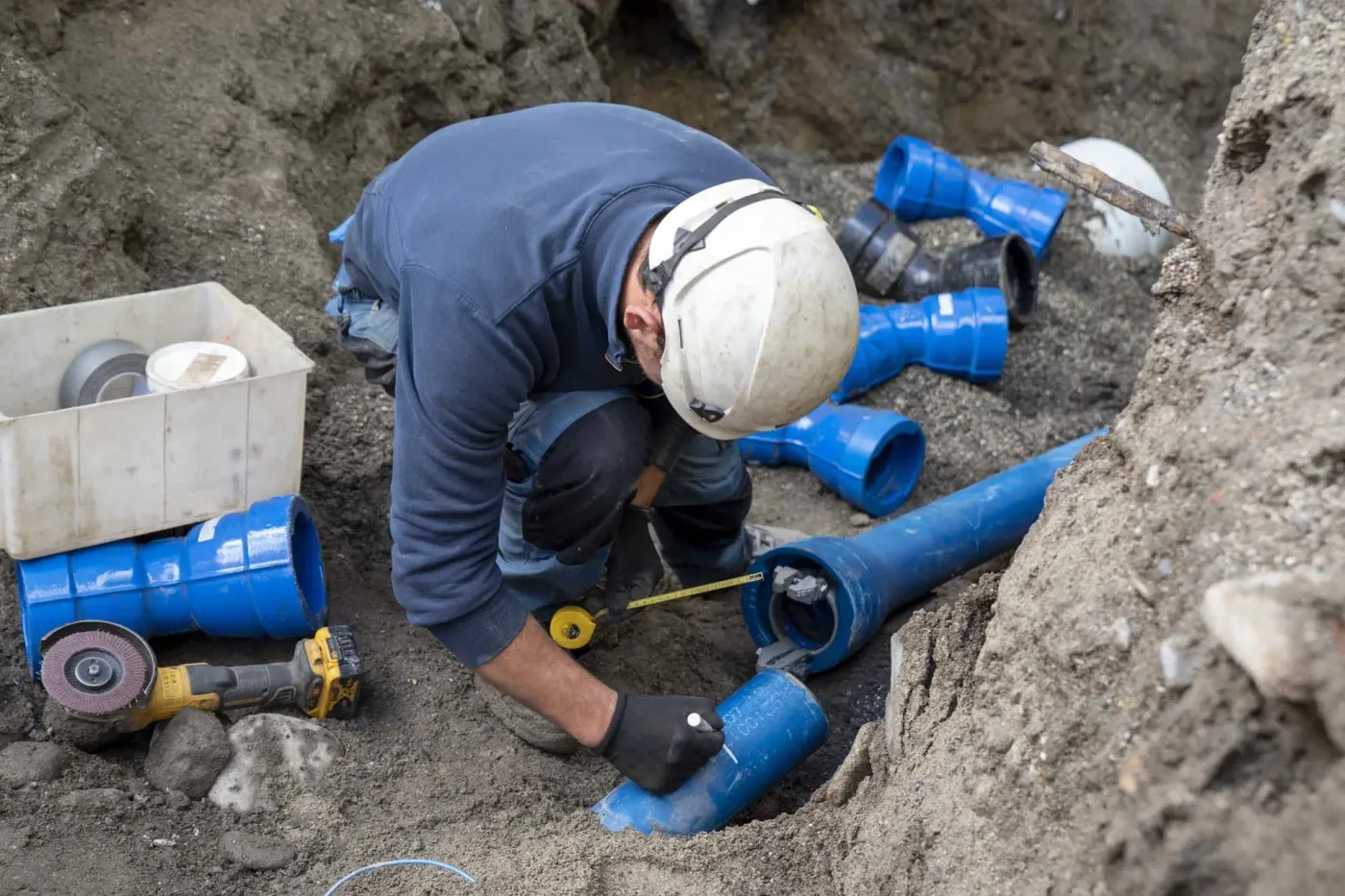
Payroll is usually the heaviest driver, because it does double duty — it is the basis a carrier rates workers compensation on, and it feeds a large share of general liability. The figure alone is not the whole story; what the payroll pays people to do matters just as much. Plumbing carries genuine injury severity: crews open trenches that can collapse, enter confined spaces short on air, and work around scald and gas hazards, which is why the Occupational Safety and Health Administration treats excavation and confined-space entry as their own safety disciplines. Rhode Island writes comp through private carriers, mandatory for most employers with staff and overseen alongside the market by the Rhode Island Department of Business Regulation. A crew doing excavation and sewer work carries real severity, so the class on your payroll and the safety record behind it are things a carrier prices against.
The DLT ladder and the contractor-master tier
Rhode Island licenses plumbers statewide through the Department of Labor and Training’s professional-regulation unit, issuing apprentice, journeyman, master, and contractor-master licenses. The contractor-master tier at the top of that ladder is worth noting, because it tells a carrier something about scope as well as skill — the range of work you are licensed and set up to take on. Beneath it, the blend of apprentice, journeyman, and master labor on your crews shapes your payroll composition and the workmanship quality an underwriter associates with supervised work. The credential is not a premium line, but the labor mix and scope behind it are part of the picture a carrier assembles when it decides how your finished installations are likely to perform.
Older Providence-area sewer, service lines, and the pollution line
Rhode Island’s older, dense systems put a distinctive exposure at the center of the cost conversation. Aging Providence-area mains, service lines, and combined sewers concentrate repair, replacement, and backflow work, and cold-Northeast winters add a freeze edge to the picture. The cost consequence is that a sewage or contaminant release is a pollution exposure — and the standard general liability policy excludes pollution. A contractor doing meaningful sewer, drain, and backflow work often carries a pollution liability line to answer for it, and that coverage choice is a real part of how the program is composed and priced. In a small, densely built state, the share of your book that touches aging, contaminant-carrying systems can run high, and that weighs on the number.
Revenue, the completed-operations tail, and the coverage stack
Revenue rates part of your general liability, but completed operations is the exposure that defines the class — the work you leave behind. A connection, valve, or sewer line keeps functioning after the crew leaves, and one that fails can flood a finished space and surface as a third-party claim long after the job closed. Because installed plumbing in a dense, aging market carries a long tail, your revenue and your workmanship record are inputs a carrier weighs closely. From there the rest of the program fills in: commercial auto covers the trucks and vans moving crews and materials, contractors’ equipment — inland marine — covers the jetters, cameras, and pumps on site and in transit, and an umbrella sits above the primary limits larger contracts require. Your work mix — residential service versus commercial and new construction — decides which lines carry the most weight, and the coverage overview shows how they fit together.
Real-World Scenario: A Providence firm runs repair, backflow, and sewer work on the city’s older mains and service lines, while a crew working the suburban towns handles new residential and light-commercial installs. Both hold the same Department of Labor and Training credential, but a carrier reads them apart: the Providence firm’s exposure rides contamination and completed-operations water damage on aging, dense infrastructure, so its pollution line carries more weight, while the suburban crew’s rides newer installs and the contract limits behind them. The owner who breaks out the share of old-city sewer-and-backflow work from the new-construction revenue gives an underwriter a cleaner read than a single plumbing label would, and usually a sharper number with it.
Coverage adequacy and loss history do a lot of the work on a Rhode Island account. In a small, densely built state where much of the book touches aging infrastructure, a carrier reads your claims record as evidence of how your installs and service response hold up, and it checks that a pollution line backs the sewer and backflow work. A contractor who documents backflow testing, carries the pollution coverage the book calls for, and sets an umbrella against the larger contract limits reads as a managed risk. That combination of a clean record and coverage sized to the real exposure is what lets an underwriter price the account tightly rather than padding it for the unknowns of dense, old-infrastructure work.
How to get an accurate Rhode Island quote
The route to a real number is to describe a real operation. Give a broker your crew payroll and its work, your crews’ license levels and scope, your revenue and the plumbing you leave behind, your share of aging-sewer and backflow work, your service-versus-new-construction split and gas-work share, your truck and equipment values, your loss history, and the limits your contracts require. From there a carrier with genuine plumbing appetite can price it, and you compare like against like instead of chasing a headline. A carrier that can see exactly where the aging-infrastructure work sits does not need to guess, and a contractor who submits that way tends to renew on terms that track the real book rather than the class. The payoff for that detail is tangible: in a small, densely built state, a submission that separates the aging-infrastructure repair from the new-construction revenue and shows a pollution line sized to the sewer work lets a carrier price the real exposure instead of the worst case. That distinction — your book, not the class average — is what a sharp quote is built on, and it is worth the few minutes it takes to lay out. When you are ready, start a quote and tell us how your crews work, or see the Rhode Island plumbing contractor insurance page for the market picture behind these drivers.