
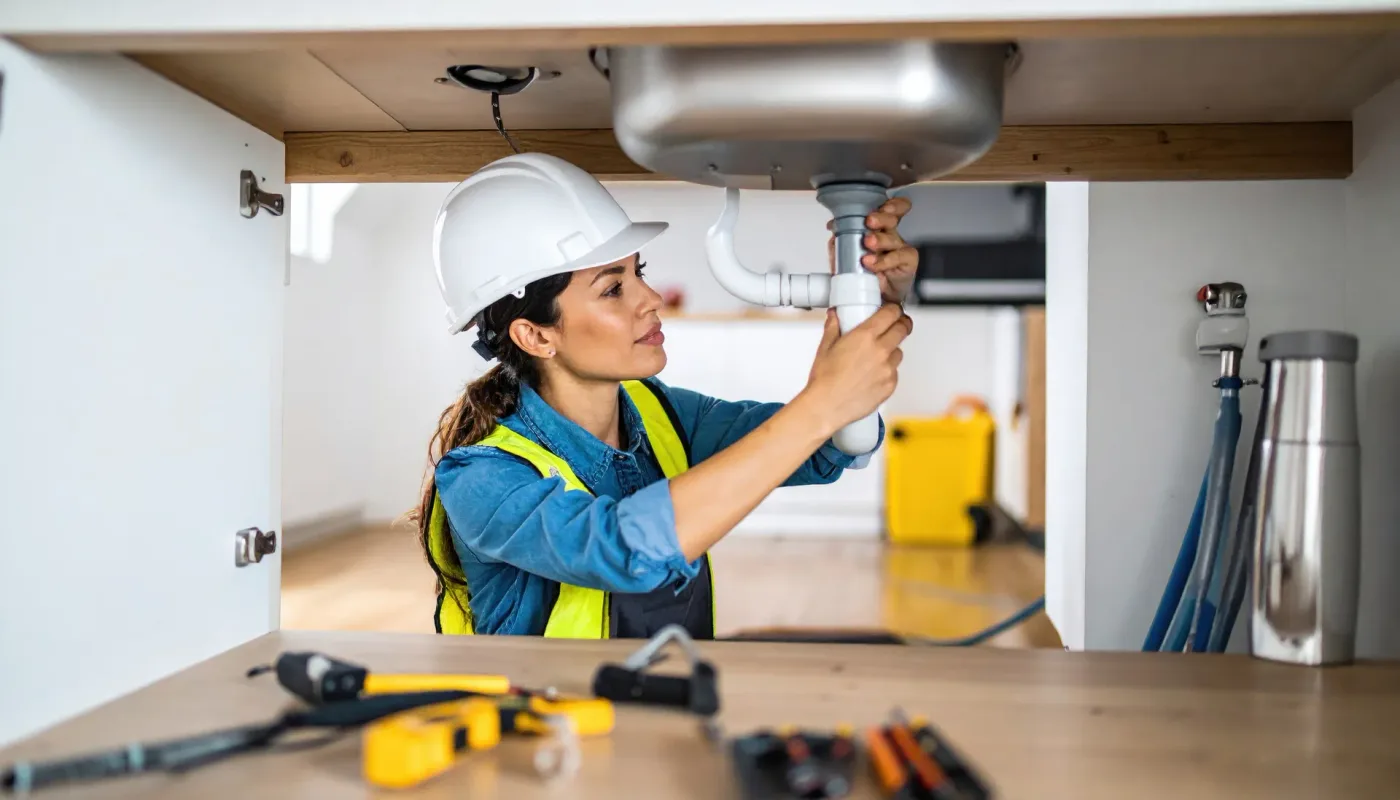
A plumbing crew does not get hurt in random ways. The injuries cluster, and three of them drive most of the severity: trench and excavation collapse on underground and service-line work, confined-space entry into pits, vaults, and tanks, and the scald and burn risk around hot water and torch work. Every one of those is a workers-compensation exposure, because when a crew member is hurt on the job, workers compensation is the line built to answer — the medical and lost-wage benefits no other policy provides, and the employers-liability protection that backs you when an injury turns into a lawsuit.
Two of those three exposures are governed directly by OSHA, and the standards are worth knowing for reasons beyond compliance: they describe, in detail, how the most dangerous plumbing work is supposed to be done. OSHA’s excavation standard — Subpart P, titled Excavations — and its confined-spaces-in-construction standard — Subpart AA, titled Confined Spaces in Construction — are the frameworks behind the two highest-severity risks a plumbing contractor manages. This post walks through the crew’s real injury profile, maps each exposure onto the standard that governs it, and explains how the workers-compensation policy actually responds when prevention is not enough.
The plumbing crew’s injury profile
Start with what the claim log actually looks like. At the severe end sit the two exposures that can turn a routine day into a catastrophe: a trench cave-in on an underground line, and a bad-atmosphere or engulfment event in a confined space. These are the injuries that make plumbing a heavier workers-compensation trade than the office worker beside it on a rate sheet — not because they are frequent, but because when they happen they are serious.
Then comes the steady middle of the log. Scald and burn injuries around hot water lines, boilers, water heaters, and torch and soldering work are a constant. So are the everyday strains from hauling pipe and fixtures, the falls on wet or uneven ground, the cuts and puncture wounds, and the repetitive-motion wear of a physical trade. None of these are exotic, and all of them are exactly what workers compensation exists to cover. Understanding the profile is the first step to matching it against the policy that answers it, and against the safety practices that keep a claim from ever opening.
Trench and excavation collapse: the standard that governs it
The most dangerous work a plumbing crew does is often the least glamorous — running a service line, replacing a sewer lateral, or repairing an underground main in an open trench. A trench wall can fail without warning, and a cave-in can bury a worker in seconds under a weight that makes rescue desperately hard. It is the signature catastrophic exposure of underground plumbing.
OSHA governs this work through its excavation standard, 29 CFR 1926 Subpart P, titled Excavations. The standard sets out the scope and definitions for excavation work, the general requirements for how a trench is to be handled, and the rules for protective systems — sloping and benching the walls back, or using shoring and trench boxes to hold them. For a plumbing contractor, Subpart P is not abstract regulation; it is a description of how to keep the trench work that causes the worst injuries from producing one. Following it is the front line of prevention, and OSHA’s own trenching and excavation resources lay out what the standard asks. When prevention fails anyway and a worker is hurt, the injury runs through workers compensation — but the goal of knowing the standard is to keep that claim from ever opening.
Confined-space entry: the second high-severity exposure
The second catastrophic risk sends a plumber somewhere a person is not meant to stay: into a meter pit, a valve vault, a lift station, a sump, or a tank. These confined spaces are not designed for continuous occupancy, they are hard to enter and harder to exit in a hurry, and they can hold hazards a worker cannot see — an oxygen-deficient or toxic atmosphere, or the risk of engulfment. What makes them so dangerous is that the space can incapacitate a worker before anyone realizes something is wrong, and an untrained rescue attempt too often adds a second victim.
OSHA governs this work through its confined-spaces-in-construction standard, 29 CFR 1926 Subpart AA, titled Confined Spaces in Construction. The standard drives how a space is evaluated before entry, the entry procedures and atmospheric monitoring that follow, and the rescue planning that has to be in place before anyone goes in. For a plumbing crew, Subpart AA is the framework behind the second-most-severe exposure on the job, and OSHA’s confined spaces resources set out what it requires. As with trenching, the standard is a prevention tool first — and when an entry goes wrong anyway, the injured worker’s medical care and lost wages run through workers compensation.
Scalds, burns, and the everyday injuries
Not every plumbing injury is a catastrophe, and the everyday claims matter to a contractor’s experience just as much. Hot water is everywhere in the trade — supply lines, boilers, water heaters, and recirculation systems all carry scald risk, and a line opened under pressure can deliver it fast. Torch and soldering work adds burn exposure, along with the fire and fume hazards that come with an open flame in tight quarters. These are the injuries that fill the middle of the claim log, and they add up.
Alongside them run the ordinary hazards of physical work: strains from lifting pipe, cast-iron fixtures, and water heaters; slips and falls on wet floors and uneven ground; cuts and puncture wounds from tools, sharp pipe ends, and debris; and the wear of repetitive motion over a career. Individually none of them is dramatic. Collectively they are the steady load a workers-compensation policy carries for a plumbing business, and they are why the trade’s payroll classifies the way it does.
How workers’ compensation answers — and Coverage B
When a crew member is hurt, the workers-compensation policy responds through two parts, and it helps to know both. Coverage A pays the injured worker’s medical treatment and a portion of lost wages on a no-fault basis — it does not matter who was at fault, the statutory benefits are owed. That is the part most people picture when they think of workers comp, and it is the piece that answers the trench collapse, the confined-space incident, and the scald burn directly.
Coverage B — employers liability — is the second part, and it does different work. It responds to certain lawsuits connected to a workplace injury that fall outside the no-fault benefit system. It is what backs a plumbing contractor when an injury claim turns into litigation rather than a straightforward benefit payment. Both parts are standard on the policy, but the specifics and limits vary, so it is worth reading what your own policy carries. The key point for a plumbing business is that this is the line — not general liability, not commercial auto — that answers when your own worker is hurt. Those other policies answer harm to other people and their property; workers compensation answers your crew.
Real-World Scenario: A plumbing crew is replacing a sewer lateral in an open trench on a commercial service call. The soil is looser than it looked, and a section of the wall gives way while a worker is down in the excavation, pinning a leg and causing a serious crush injury. The crew follows its rescue plan and the worker is stabilized, but the injury means surgery and weeks off the job. The workers-compensation policy responds: Coverage A pays the medical treatment and a portion of the lost wages on a no-fault basis, regardless of how the collapse happened. Had the trench been sloped or shored to the excavation standard, the cave-in might never have occurred — which is why knowing the standard and carrying the coverage are two halves of the same responsibility, not substitutes for each other.
Monopolistic states: where comp comes only from the state fund
One structural wrinkle matters for any plumbing contractor with multi-state payroll. In four states — North Dakota, Ohio, Washington, and Wyoming — workers compensation is monopolistic, which means the coverage is written only through the state fund, not through private carriers. If your crew has payroll in any of them, you obtain the required workers-compensation coverage from the state program rather than shopping it on the private market.
That structure has a practical consequence worth flagging. Because employers-liability protection can work differently under a monopolistic system, contractors with payroll in those states often look at a separate policy to fill that gap rather than assume the state fund provides it the way a private policy would. The honest instruction is the same one that runs through this whole topic: confirm how your specific state handles it against the work your crew actually does, rather than assume the arrangement in one state matches another.
Read your class codes against the work your crew does
The through-line is simple. A plumbing crew’s severity is driven by trench and excavation collapse, confined-space entry, and the scald, burn, and strain injuries of a physical trade — and workers compensation is the line built to answer every one of them, through the medical and wage benefits of Coverage A and the employers-liability protection of Coverage B. OSHA’s excavation standard, Subpart P, and its confined-spaces standard, Subpart AA, govern the two catastrophic exposures directly, and following them is how you keep the worst claims from ever opening. Because the coverage is written only through the state fund in North Dakota, Ohio, Washington, and Wyoming, multi-state payroll needs a state-by-state look. All of this comes back to matching your class codes and payroll to the work your crew genuinely performs. When you are ready, start a quote and tell us what your crews are in the ground and the tanks doing, read the full workers compensation page to see how the coverage and its two parts fit together, or browse the coverage overview to see where this line sits alongside the rest.