
Plumbing insurance by state
Plumbing Contractor Insurance in Massachusetts
Massachusetts licenses one credential for two trades — the Board of State Examiners of Plumbers and Gas Fitters covers both — so a large share of the state’s plumbing crews are also licensed gas fitters. That pairs an ordinary water loss with gas-line severity, set over some of the oldest urban water infrastructure in the country.
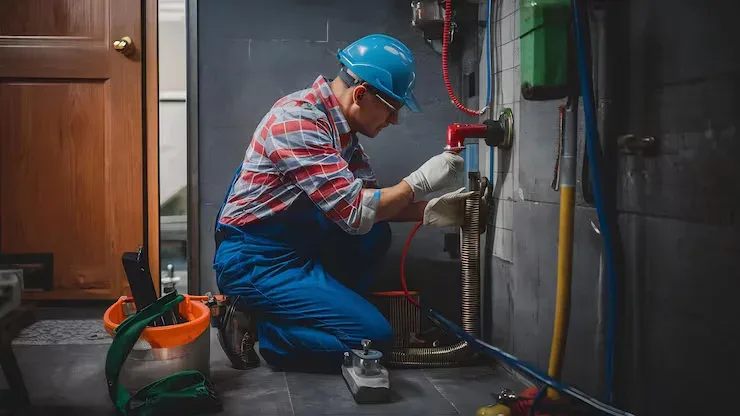

Plumbing in Massachusetts carries a fact no other state frames the same way: one board licenses two trades. The Board of State Examiners of Plumbers and Gas Fitters covers both plumbing and gas fitting across apprentice, journeyman, and master tiers, so a large share of Massachusetts plumbing crews are also licensed gas fitters — and a single operation runs work with two very different severities. On the plumbing side, an ordinary water loss: a failed connection floods a finished space. On the gas side, a failure whose fire and explosion consequences run well beyond any water loss. Set that pairing over some of the oldest urban water infrastructure in the country — aging mains, lead service-line replacement, and combined sewers concentrated around the Boston area — and a Massachusetts plumbing program carries weight, on the coverage and on the limits, that a generic business policy never anticipates.
This page walks the Massachusetts-specific realities a plumbing program has to answer for: the joint plumber-and-gas-fitter licensing board, the two severities that credential implies, what actually drives cost here, the private-market workers-comp picture, the claims we see, and the major markets across the state. The coverage lines themselves — general liability, pollution liability, workers compensation, commercial auto, contractors equipment, umbrella, and professional liability — are covered in depth on their own pages; here the focus is how Massachusetts changes the emphasis.
Massachusetts Plumbing Licensing & the Joint Plumber-and-Gas-Fitter Board
Massachusetts licenses plumbers and gas fitters statewide through the Board of State Examiners of Plumbers and Gas Fitters, covering apprentice, journeyman, and master tiers.
The practical effect for a plumbing program is unusual. Because Massachusetts licenses plumbers and gas fitters through the same board, and across the same apprentice-through-master ladder, a great many crews here hold both credentials and run both kinds of work — often on the same job. That means the license itself signals an operation whose exposure spans two very different severities, and a general contractor, developer, or building owner still leans on your coverage, your limits, and your additional-insured endorsements to decide whether to let you on the job. The credential says you are qualified for the plumbing and the gas work; the certificate of insurance is what confirms the limits behind it are sized for the gas side, which is why the general liability program and its additional-insured terms carry so much weight in a state that licenses the two trades together.
Two Trades, Two Severities: the Core Massachusetts Risk
The joint license is not a paperwork detail — it defines the risk. A crew that runs both water and gas work carries two exposures that sit at opposite ends of the severity scale, and a Massachusetts program has to answer both:
- Completed-operations water damage. A connection or repair on a finished job that fails and floods the space — the products-completed-operations claim this trade turns on, heavy in a market full of repipe and replacement work over aging systems.
- Gas-line severity. On gas work, a leak, a bad joint, or hot work on a fuel line whose failure carries fire and explosion consequences well beyond a water loss — the severe end of the operation, and the reason the umbrella liability and general liability limits have to be sized for more than water damage.
- Sewage and contaminant release. On drain and sewer work over the state’s older mains and combined sewers, a backup or contaminant release that the standard general liability policy carves out through its pollution exclusion — answered by pollution liability, a distinct line.
- Trench, confined-space, scald, and hot-work injury. The workers-compensation exposure a plumbing-and-gas crew runs on every excavation, boiler, and fuel-line job.
Price a Massachusetts book around water damage alone and the gas severity — the loss that can involve a whole structure — is the piece most likely to be underinsured. That is the gap we build the program to close.
What Plumbing Contractor Insurance Costs in Massachusetts
There is no single Massachusetts price, because premium is driven by your operation, not your ZIP code alone. The cost drivers that matter most here:
- How much of your book is gas work. A crew running gas fitting alongside plumbing carries the fire-and-explosion severity that a water-only shop does not, and that changes the liability picture an underwriter prices to.
- Payroll and crew classifications. Payroll is the base the workers-comp exposure is rated on, and the classification of a crew doing trench, confined-space, and hot-work jobs drives what it costs.
- Repipe, sewer, and backflow volume. A book heavy on work through the state’s aging mains and combined sewers carries a deeper completed-operations and pollution tail, and underwriters weigh it.
- Work mix. Residential service and remodel, commercial and institutional systems, and gas-heat and boiler work each carry a different severity and pollution profile, and each prices differently.
- Claims history and contract requirements. Prior losses and the additional-insured and limit terms your general-contractor and institutional work demand both move the number.
We price to the real operation rather than quoting a figure off the state name.
Workers Compensation in Massachusetts
Massachusetts is a private-market workers compensation state — coverage is written by private carriers and is mandatory for most employers with employees. For a plumbing crew exposed to trench, confined-space, and scald hazards, comp is a core line, and how the class is rated and managed is worth getting right. Because a plumbing-and-gas crew works in trenches, in confined spaces, and around scald and hot-work hazards, comp is never optional here — and because it is placed in the private market rather than a state fund, how the crew is classified and the class managed is what separates a fair rate from an expensive one. We read the classifications and the loss history against how your crews actually run on the workers compensation page rather than treating it as fine print.
Common Massachusetts Plumbing Claims We See
Described qualitatively, with generic carrier language — every claim is handled by the carrier, never named here, and with no fabricated figures:
- The gas-line loss. A leak, a bad joint, or hot work on a fuel line whose failure carries fire consequences well beyond a water loss — the severe-end claim the general liability and umbrella limits have to be sized for, and the reason the gas side of the license changes the program.
- The completed-operations water loss. A repaired or repiped line that fails after the job and floods a finished interior — the completed-operations claim the carrier answers under general liability, heavy in a repair-and-replacement market over aging systems.
- The sewer-work release. A backup or contaminant release during drain or sewer work over the state’s older mains that the general liability pollution exclusion carves out — the claim a pollution liability line is built to answer.
Why Massachusetts Plumbers Choose Plumbing Guard Insurance
We write one class — plumbing contractors — and we place coverage with carriers that actually want the work. In Massachusetts that focus shows up in the questions we ask before we quote: how much of your book is gas fitting alongside plumbing, and whether your limits are sized for that severity rather than water damage alone; how much repipe, sewer, and backflow work you do over the state’s aging systems and the pollution exposure it carries; how your crew is classified for comp in a private-market state; and whether your general liability carries the completed-operations and additional-insured terms a Massachusetts general contractor or institutional owner will demand. When a certificate request lands on your desk with requirements you do not recognize, that is a call we take.
Major Massachusetts Plumbing Markets
Massachusetts is not one plumbing market but several, each with its own exposure and operating profile:
Boston
The dense urban core sits over some of the oldest water and sewer mains in the country, with lead service-line replacement and combined-sewer work concentrated across the neighborhoods — and a downtown gas-distribution network beneath the same streets, so a single crew often runs both water and gas work where a leak carries very different consequences.
Worcester
A mill-city core of aging tenement and multi-family housing drives heavy repipe, drain, and boiler-and-gas-heat work through a hard New England winter, where freeze-driven burst lines and gas-fired heating systems put both the water-loss and gas-severity exposures on the same book.
Springfield
The western-Massachusetts hub carries an older industrial and residential building stock over aging service lines, with gas-heat conversions and boiler work common — concentrating both the completed-operations water exposure on repipe work and the gas-line severity a Pioneer Valley heating book generates.
Cambridge
A dense, historic building fabric next to Boston mixes century-old residential systems with institutional and lab-building plumbing, where retrofit work threads new lines through old walls and the additional-insured demands of general-contractor and institutional jobs land on the same crews.
Lowell
A Merrimack Valley mill city with a canal-era water system and dense triple-decker housing generates sustained repair, replacement, and gas-heat work, where freeze exposure and gas-fired heating systems keep both severities live through the heating season.
Related reading
Coverage for a Massachusetts plumbing business works as a system. The lines that carry the most weight here are general liability (completed-operations water damage and the gas-line severity a joint-license crew runs) and umbrella liability (the limits the gas severity demands past general liability), alongside pollution liability (the sewer and contaminant exposure the standard policy excludes), workers compensation, commercial auto, contractors equipment, and professional liability for design and consulting work. How the program is written also differs by the plumbing you do across the two service pillars.
Coverage for Massachusetts plumbers
- General Liability Insurance
- Pollution Liability Insurance
- Workers Compensation Insurance
- Commercial Auto Insurance
- Contractors Equipment Insurance
- Umbrella Liability Insurance
- Professional Liability Insurance
The plumbing you do
Get covered
Massachusetts sources
Frequently asked questions about plumbing insurance in Massachusetts
Are Massachusetts plumbers and gas fitters licensed by the same board?
Yes — and it is the defining fact of the state. Massachusetts licenses both trades statewide through the Board of State Examiners of Plumbers and Gas Fitters, across apprentice, journeyman, and master tiers, so a large share of plumbing crews here hold a gas-fitting credential alongside the plumbing one. That single board pairs two very different exposures on one operation: an ordinary water loss on the plumbing side, and a gas-line failure whose fire and explosion consequences run well beyond any water loss. We build the coverage program to answer both severities rather than pricing the operation as if it only ran water.
Why does gas work change what a Massachusetts plumbing program has to carry?
Because a gas-line failure is a fundamentally different loss than a water leak. A failed water connection floods a finished space; a gas failure — a leak, a bad joint, or hot work on a fuel line — carries fire and explosion consequences that can involve the whole structure and the people in it. When a crew licensed for both trades does gas work, the general liability and umbrella limits have to be sized for that severe end, not just the water loss. A Massachusetts program that is priced only around water damage can leave the gas exposure underinsured, which is exactly the gap we underwrite around before a policy binds.
How does the age of Massachusetts water infrastructure affect a plumbing book?
Massachusetts runs over some of the oldest urban water and sewer systems in the country — aging mains, lead service lines slated for replacement, and combined sewers concentrated around the Boston area. That drives a steady book of repair, replacement, and backflow work, and it raises the pollution question: on drain and sewer work, a backup or contaminant release is generally carved out of the standard general liability policy by its pollution exclusion, and answered instead by a dedicated pollution liability line. We flag that sewer-and-contaminant exposure before it becomes a declined claim.
Does a Massachusetts plumbing business have to carry workers compensation?
Yes, in almost every case. Massachusetts is a private-market state — workers compensation is written by private carriers, not a state fund — and it is mandatory for most employers with employees. For a plumbing crew working in trenches, in confined spaces, and around scald and hot-work hazards, comp is a core line, and how the crew is classified and the class managed drives what it costs. Because it is placed in the private market, an underwriter reads your payroll, your classifications, and your loss history closely — and we manage that rather than treating comp as a box to check.
What drives the cost of plumbing insurance in Massachusetts?
Premium is driven by your operation, not the state name. In Massachusetts the biggest factors are your payroll and crew classifications, how much of your book is gas work versus water-only plumbing, your mix of residential service and remodel versus commercial and institutional work, your repipe and sewer-and-backflow volume over the state’s aging systems, your service-truck count and values, and your claims history. A downtown Boston crew running both water and gas work looks very different to an underwriter than a water-only service shop, because the gas severity changes the liability picture. We price to that real operation rather than a figure off the map.
Do you write plumbing insurance across all of Massachusetts?
Yes. Plumbing Guard Insurance places coverage for plumbing contractors across Massachusetts — from Boston and Cambridge through Worcester, Springfield, and Lowell — and across the rest of the 48 states we serve. We write residential service and remodel plumbers and commercial and institutional contractors, and we size the program for the gas-fitting side of the license, not just the water work.
Get a quote for your Massachusetts plumbing business
Tell us where in Massachusetts you work, how much of your book is gas work alongside plumbing, and the jobs you run — and we will market it to carriers that write the class and size the limits for the gas severity.