

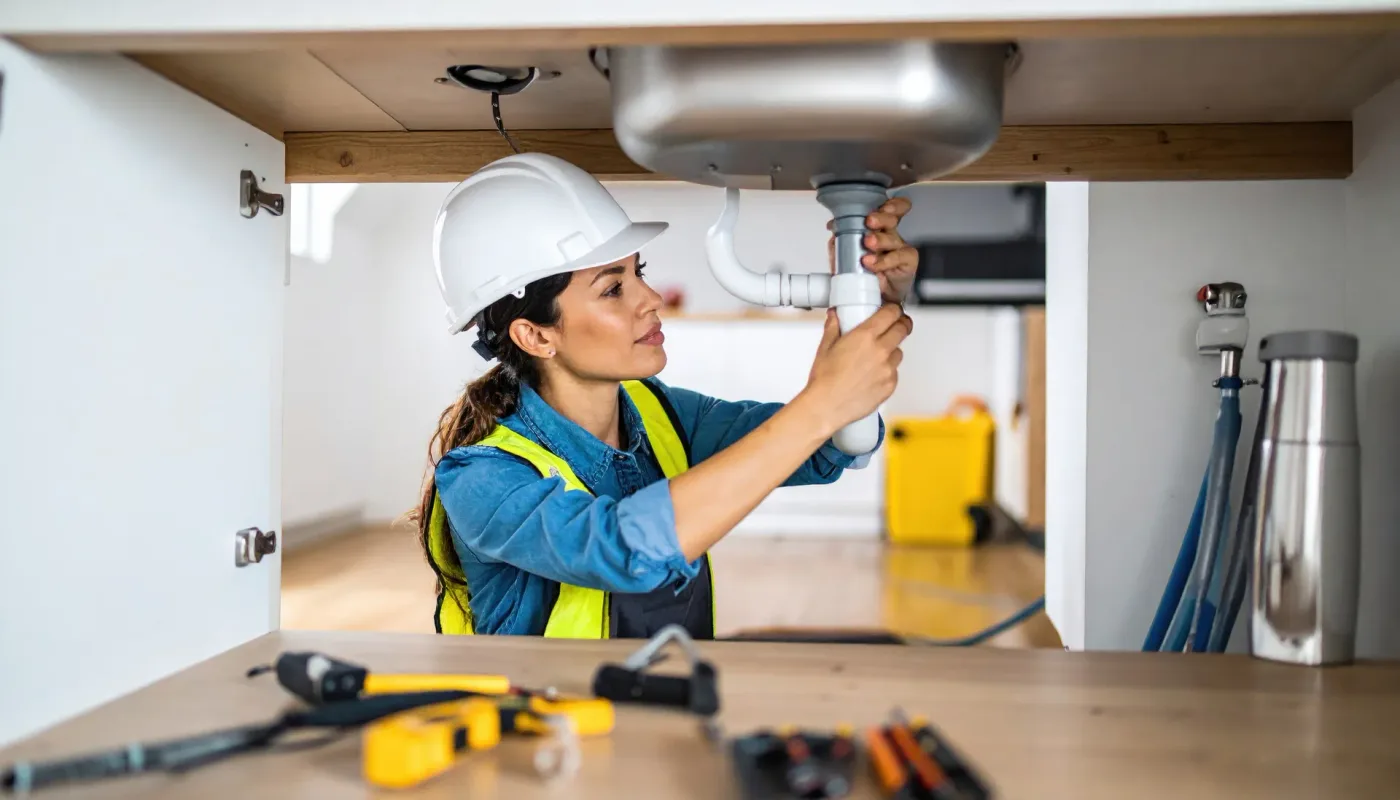
A plumber who installs medical gas piping needs the same core program as any commercial plumbing contractor: general liability, workers compensation, commercial auto and equipment coverage. The difference is that the liability policy has to be confirmed for health care facility work, because some forms restrict it, and the contract from a hospital or clinic usually asks for more than a standard job. Oxygen, vacuum and other medical gas lines serve patients, so a mistake in this work is judged by a different standard than a leaking supply line.
What makes medical gas piping a different risk from other commercial plumbing?
The consequence of an error is different. When a domestic water line fails, the usual result is property damage. When a medical gas outlet delivers the wrong gas, or a system loses pressure during a procedure, the result can be bodily injury to a patient who had no way to protect themselves. Underwriters know this, and they look at medical gas work more closely than at the rest of a commercial plumbing book.
The work also takes place in buildings that never close. Hospitals keep operating while you tie into live systems, shut down zones and work above ceilings in patient areas. That puts your crew around staff, patients and visitors every hour of the job, and it puts your work close to equipment and finishes that are costly to disturb.
Finally, the paperwork is heavier. Health systems and their construction managers tend to write detailed insurance exhibits, prequalify contractors and check credentials. The coverage you carry has to match what those documents ask for, not only what a typical general contractor accepts.
Will your general liability policy actually cover health care work?
That is the first question to settle, and the answer is on the policy itself. General liability for a plumbing contractor is usually written under a plumbing classification, but carriers handle health care work in different ways. Some write it without comment. Others add an exclusion for work in hospitals or health care facilities, or limit coverage to the operations described on the declarations.
Ask your agent three direct questions. How is my medical gas work described on the application and the quote? Is there any endorsement that mentions hospitals, health care facilities or designated work? And does completed operations coverage apply to medical gas systems after they are turned over? If the answers are vague, ask to see the wording. The post on how to read a plumbing insurance policy shows where those terms usually sit.
Completed operations matters here as much as anywhere. A medical gas system keeps running long after your crew leaves, and a claim tied to a connection you made can surface well after final payment. The post on completed-operations water damage explains how that part of the policy works, and the same mechanics apply to a gas outlet as to a water line.
How do you describe medical gas work on the application?
Describe it plainly and completely. Underwriters can only price and cover what they are told, and a vague description such as commercial plumbing leaves room for a dispute later about whether medical gas work was ever contemplated.
A useful description covers what you install, where and how often. Say which gases and vacuum systems you pipe, whether you work in hospitals, surgery centers, dental offices or clinics, whether you tie into live systems, and what share of your work this represents in general terms. Say whether your installers hold a recognized medical gas credential. Many jurisdictions and facility owners expect one, but requirements vary by state and by local authority, so confirm what applies where you work.
Mention who does the final verification. On many projects an independent verifier tests the system before it is placed in service. That step is a quality control, not a transfer of your liability, and underwriters like to know it happens.
Gases, settings and credentials described in plain words
Brazing, overhead work and occupied buildings on the comp policy
Completed operations and the umbrella above it
What do hospital and clinic contracts usually ask for?
More than a typical subcontract. Expect a request for additional insured status on both ongoing and completed operations, a waiver of subrogation, primary and noncontributory wording, an umbrella and a certificate that shows all of it before you mobilize. The post on additional insured endorsements for plumbing contractors explains how those endorsements work.
Some health care owners also ask for proof of a safety program, infection control training or a record of past claims. None of those are insurance policies, but they sit in the same prequalification packet, and missing them can cost you the job as surely as a missing endorsement.
Read the exhibit before you price the work. If it asks for limits you do not carry, an umbrella is the usual answer, and it takes time to arrange. If it asks for an endorsement your carrier does not offer, you want to know that before you sign, not when the certificate request arrives.
Watch the flow-down as well. If you subcontract part of the medical gas scope, such as alarm wiring or the installation of a manifold, the facility will usually expect your subcontractor to carry insurance that matches yours and to name the same parties. Collect their certificates and endorsements before they start. An auditor or a claims adjuster who finds an uninsured subcontractor on a hospital job may treat that work as your own exposure, and the facility will look to you first either way. The post on what general contractors require from plumbing subs shows how those obligations pass down a contract chain.
Where does professional liability come in?
It comes in when you make design decisions. A contractor that installs to drawings stamped by an engineer is mainly exposed through general liability. A contractor that lays out zones, sizes lines, chooses alarm and valve locations or works on a design-build basis is giving professional judgment, and an error in that judgment can cause financial loss without anything breaking.
General liability is built to answer harm, not a wrong decision. Professional liability is built to answer the decision. The post on professional liability for design-build plumbing walks through that seam in more detail. If your health care work includes design-assist, ask your agent whether you need it.
How should workers comp be set up for a medical gas crew?
Set it up around the work your installers actually do. Medical gas crews braze copper, often with a nitrogen purge, work overhead in ceilings and shafts, and move material through occupied corridors. Burns, falls from ladders and lifts, and strain injuries are the usual concerns.
Workers compensation is priced on payroll by classification, so keep payroll records that separate field installers from office staff. Keep training records and safety practices on file as well. Health care owners often ask for them, and an underwriter who sees an organized safety program has more to work with. Remember that North Dakota, Ohio, Washington and Wyoming are monopolistic states, where comp comes only from the state fund.
Real-World Scenario: A commercial plumbing contractor that has done hospital domestic water work for years is invited to bid a medical gas renovation in an operating suite. The insurance exhibit asks for completed operations additional insured status and an umbrella. When the owner asks the agent to confirm coverage, the agent finds an endorsement on the current liability policy that restricts work in health care facilities. The contractor moves the liability to a carrier that writes the work, adds the umbrella the contract requires and submits the bid with a certificate that matches the exhibit.
How do equipment and vehicles fit in?
Medical gas work uses brazing rigs, nitrogen cylinders, test gauges and analyzers that travel from job to job. Contractors equipment coverage, an inland marine form, is the usual home for tools that move. Schedule the higher value items, and ask how the policy treats equipment left in a vehicle overnight or stored in a facility between shifts.
Vans and trucks belong on commercial auto. If you carry compressed gas cylinders, tell the agent, because some carriers ask about it.
What should you bring when you ask for a quote?
Bring the facility contract or a sample insurance exhibit, a plain description of your medical gas work and the settings you work in, the credentials your installers hold, payroll by type of work, a vehicle and driver list, an equipment schedule and your claims history. With those in hand an agent can tell you quickly whether your current program fits, where it falls short and what a health care owner is likely to ask next.
The NAIC explains the endorsements that change a policy in its guide to riders and endorsements, which is useful background before you read your own.
If you are pricing medical gas work and want the liability form checked first, ask us for a quote and send the contract along. You can also read about Wexford Insurance and the way we review health care work before we place it.