

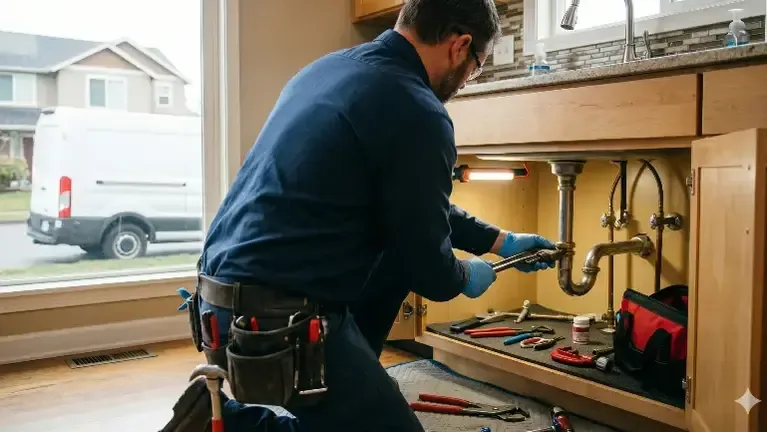
Builders and general contractors usually ask a new construction plumber for general liability with completed operations, workers compensation, commercial auto and often an umbrella, together with endorsements that name them as additional insureds and waive subrogation. Behind that list sit two quieter questions: whether your liability form allows the kind of building you are bidding, and whether you can produce the paperwork as fast as the project moves. This post walks through what each ask means for a plumber working ahead of the drywall.
Why do builders look so closely at a plumbing sub’s insurance?
Because the plumbing goes into the walls and stays there. A builder who hires you is accepting the risk that a connection you made will fail after the building is occupied, and that the claim will come back to the builder first. The builder’s own insurer expects the builder to push that risk down to the trade that created it, and your policy is the mechanism.
New construction also stacks trades on top of each other. Your crew works beside framers, electricians, mechanical trades and finishers, and damage to their work, or an injury to one of their people, can become a claim against you. Builders know this from experience, which is why their subcontracts are written the way they are.
The result is that your insurance is judged before your price. A bid that cannot be backed by the right certificate and endorsements usually goes nowhere, however competitive it is.
What does a builder’s insurance list actually translate to?
Each request on the list maps to a specific policy or endorsement. The rows below pair the usual requests with what they mean for you.
The mechanics of each endorsement are covered in the post on additional insured endorsements for plumbing contractors, and the subcontract exhibit itself is explained in what general contractors require from plumbing subs. This post stays with the new construction side of the question.
Does your liability form allow the buildings you want to bid?
Check this before anything else. Some general liability forms restrict or exclude new residential construction, tract housing, or apartment, condominium and townhome projects, because those buildings can produce claims long after they are sold. Other forms write the same work without comment.
The restriction does not always announce itself. It may appear as an endorsement limiting the types of projects covered, or as a narrow description of operations on the declarations. If you rough in subdivisions or multi-unit buildings, ask the agent to confirm in writing that your form has no such restriction. The NAIC explains how endorsements change a policy in its guide to riders and endorsements.
Commercial new construction raises its own questions, such as work on public projects or in high-rise buildings. The commercial plumbing service page covers that segment.
How long does the completed operations tail run on a new building?
Longer than on almost any other plumbing work. A service call touches one fixture in a building that already has a history. A new building starts its life with your piping inside it, and the owner, the buyers and the association that follows all have reasons to look for a responsible party if water appears in a ceiling.
The time limit for bringing a construction defect claim depends on the state, and builders are often brought into claims years after a project closes. That is why they insist on completed operations additional insured status and why they ask you to keep it in place for a period after the job. The post on completed-operations water damage explains how that coverage is triggered.
Keep your policies in force without gaps, keep old declarations pages and keep job records that show what you installed and when the work was accepted. Those records matter more on new construction than anywhere else.
What happens when your work damages another trade’s work?
It becomes a liability question, and on new construction it comes up often. A test that fails on a pressurized line can soak framing, insulation and drywall that another trade just installed. A torch used to sweat copper can scorch nearby material. A crew cutting a chase can damage wiring already in the wall.
Damage to other contractors’ work is property damage to someone else, which is the kind of loss general liability is built to answer, subject to the policy’s terms. The cost of fixing your own faulty piping is different. Standard forms exclude damage to your own work and the cost of redoing it, with some exceptions, and the post on the your-work exclusion explains where that line sits.
The reverse also happens. Another trade can damage your installed piping before the building is closed in, and the question of who pays may turn on the subcontract, the builders risk policy and the other trade’s liability coverage. Photograph your rough-in when it passes inspection, and keep the record with the job file.
What changes when the project is under a wrap-up?
A wrap-up is an insurance program the owner or general contractor buys to cover the trades on one project, often called an OCIP or a CCIP. When you enroll, the wrap-up usually covers your liability for work on that site, and some programs cover workers comp too.
It does not replace your own program. You still need your own policies for every other job, for anything you do away from the site and for your vehicles. Report enrolled payroll correctly so your own insurers do not charge for exposure the wrap-up already covers, and ask how long the wrap-up’s completed operations coverage lasts after the project ends.
Read the enrollment paperwork closely. Ask what the wrap-up excludes, whether it covers your work stored off site, whether you must carry your own limits beneath or alongside it, and who handles a claim. Some wrap-ups leave contractors responsible for a deductible, and some end completed operations coverage sooner than the builder’s contract expects. Your agent should see the wrap-up manual before you price the job, so any gap can be closed with your own program.
How does builders risk interact with your work?
Builders risk is property coverage for the structure while it is under construction, usually bought by the owner or the builder. Whether it covers your installed piping, your materials stored on site or your tools depends on the policy, and contractors are not always included.
Ask to see the builders risk policy, or at least a summary of who is covered. Protect your own tools and staged material with contractors equipment coverage either way, because theft from open jobsites is a familiar problem on new construction.
Real-World Scenario: A plumbing contractor that has grown on service and remodel work is invited to rough in a subdivision for a regional home builder. The builder’s packet asks for completed operations additional insured status and an umbrella. When the agent reviews the existing liability policy, it turns out to carry an endorsement excluding new residential construction. The contractor moves its liability to a carrier that writes subdivision work, adds the umbrella, and sends the builder a certificate and endorsements before the first slab is poured.
What do crews and trucks need on a new construction job?
New construction crews dig and set underground lines before the slab floor, work from ladders and lifts during top-out and move heavy material around an active site. Workers compensation has to reflect that work, and builders often ask about your safety program and comp experience. OSHA sets out its expectations for excavations on its trenching and excavation page, and the post on trench safety for plumbing contractors covers the practical side. In the monopolistic states, North Dakota, Ohio, Washington and Wyoming, comp comes only from the state fund.
Trucks and trailers that haul pipe and fixtures to the site belong on commercial auto, and builders frequently ask for it on the certificate.
How do you get ready before the next invitation to bid?
Build a packet once and keep it current: certificates, sample endorsements, a short description of your safety program, licensing details and your claims history. Ask your agent to confirm that your liability form allows the building types you want to chase, and arrange an umbrella before a contract demands it rather than after.
Then test your certificate turnaround. Builders often issue a new subcontract for each phase or each building, and each one can bring a new certificate request with project-specific wording. An agency that takes days to respond can hold up your start date. The post on avoiding missed certificate renewals has practical habits for keeping that paperwork moving.
If a builder’s packet is sitting on your desk, send it to us with a quote request and we will check it against your current program. You can also learn about our agency and how we work with plumbing contractors who build for builders.