

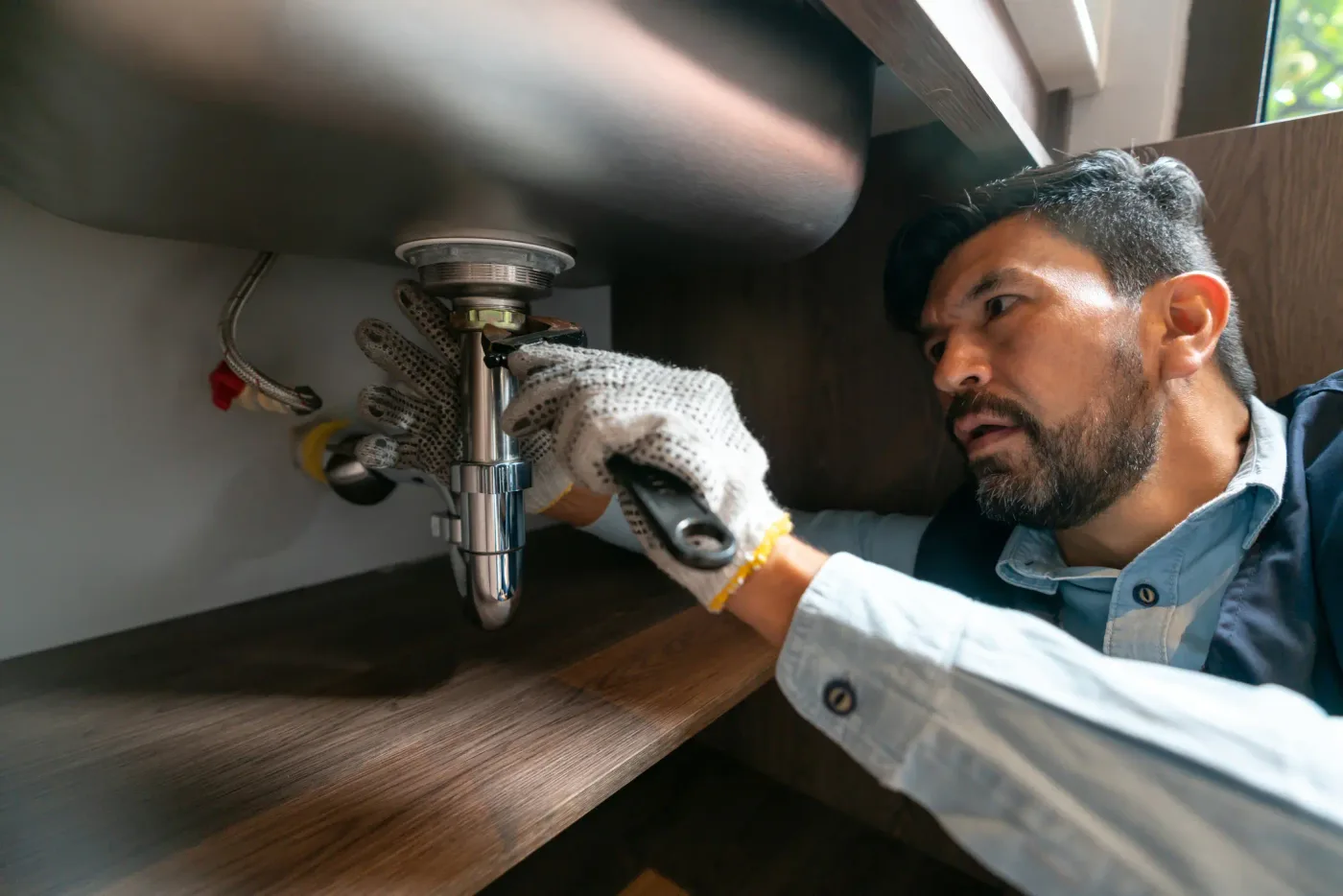
Accidental pollution wording pays for a sudden, unexpected release of a contaminant, while operational pollution coverage pays for contamination that arises from the plumbing work itself, including releases that build up slowly before anyone notices. Both can cover claims for bodily injury and property damage, and the better forms add cleanup costs. The difference is the trigger, and for a plumbing contractor the trigger often decides whether a claim is paid at all.
What does “operational” pollution mean for a plumber?
It means contamination that comes from doing the work, not from a single dramatic event. Plumbing is full of it. A cross-connection during a repair that lets dirty water into a potable line. Primer and solvent fumes in a tight mechanical room. Old pipe insulation disturbed during a repipe. Chemical drain cleaner reacting in a line. Sewage that seeps from a joint you replaced, slowly, until a floor rots.
None of those needs to be sudden to cause a claim. An operational trigger, often described as covering “pollution conditions” arising from your operations, responds whether the release was abrupt or gradual. That is the broader wording, and it is what most pollution liability policies written for contractors aim to provide.
What does “accidental” pollution wording cover, and where does it stop?
Accidental wording, sometimes called sudden and accidental, responds only when the release is abrupt and unexpected. A water line that bursts during a repair, a tank that splits while being moved, a jetter that ruptures a weak pipe and floods a basement with sewage: those fit.
It stops at anything gradual. Some limited pollution endorsements go further and add time windows: the release must start and stop within a short period, and you must discover it and report it within set deadlines. A leak behind a wall that seeps for weeks before a tenant smells it will rarely meet those terms.
Accidental-only wording is not worthless. For a company that does mostly fixture work and water heater swaps, it may answer the claims most likely to happen. For a drain, sewer, backflow or repipe contractor, it leaves the slow claims uncovered, and those are often the expensive ones.
Why doesn’t general liability settle the question?
Because standard general liability forms exclude most pollution to begin with. The exclusion has a few narrow exceptions built into the form, for example around fuels leaking from mobile equipment or fumes from materials a contractor brings into a building, and those exceptions can themselves be removed by endorsement.
Some carriers that write plumbing contractors add limited pollution back onto the liability policy, often on accidental terms. Others attach a stricter exclusion. So the same claim can be partly covered on one plumber’s liability policy and not at all on another’s. The post on sewage backups and what GL excludes walks through how that exclusion reads.
The practical point: do not assume your liability policy has a pollution answer just because it has a liability limit. Find the pollution exclusion, then find every endorsement that touches it. The NAIC’s note on how endorsements change a policy is a good primer before you start.
What does a contractors pollution policy actually pay for?
Read the insuring agreement and definitions for five things:
- Bodily injury. Illness or injury from contamination, such as a tenant sickened by contaminated water.
- Property damage. Damage to the customer’s building and contents, and to neighboring property.
- Cleanup costs. Removing and disposing of the contaminant. Some forms pay only when a government agency orders the cleanup; better forms also pay for cleanup demanded by the property owner.
- Defense. Legal costs, and whether they reduce the limit or sit outside it.
- Natural resource or third-party site damage. Less common for plumbers, but relevant if a release reaches a creek or storm system.
Cleanup is often the largest piece, and the definition of cleanup costs is where forms differ most. A policy that pays for injury and damage claims but not for cleanup can leave you paying the remediation contractor yourself.
Does pollution coverage follow the job after you leave?
Only if completed operations is included. Many pollution claims surface after the crew has gone: a new sewer lateral that weeps at a joint, a water heater vent that fails, a backflow assembly installed wrong. A policy that covers ongoing operations alone will not respond to those.
The trigger type matters here too. An occurrence policy generally answers based on when the damage happened; a claims-made policy answers based on when the claim is made, and may need a retroactive date that reaches back to your earlier work. Our post on whether general liability covers water damage after the job explains the same occurrence and claims-made distinction on the liability side.
Which plumbing jobs lean hardest on operational wording?
The ones where contamination can develop slowly or out of sight:
- drain cleaning, hydro jetting and sewer lateral repair, where sewage and debris can escape over time;
- backflow testing and installation, where a failure can contaminate a potable supply;
- repipes and remodel work in older buildings, where disturbed materials and dust can spread;
- water heater and boiler work, where fuel, combustion gases and chemical treatment are involved;
- commercial kitchen and grease work, where waste lines carry more than water.
Crews doing that work also face confined spaces and gases on the comp side. OSHA’s confined spaces page sets out the hazards, and our post on sewer line and drain cleaning contractor insurance matches each exposure to its policy.
Real-World Scenario: A plumbing company replaces a section of waste line in a small commercial building. Weeks later the tenant reports an odor, and investigation finds sewage has been seeping from a joint into the wall cavity and subfloor since the job. The company’s liability policy carries limited pollution coverage on sudden and accidental terms with tight discovery windows, which the slow leak does not meet. A separate contractors pollution policy written on an operational trigger, with completed operations and cleanup costs included, answers the tenant’s claim and pays the remediation crew.
Where else can a pollution claim come from?
Your vans and your waste. Commercial auto forms also limit pollution, so a spill of drain chemicals or waste you are hauling may not be covered there. Some contractors pollution policies add transportation coverage for that gap. Others add coverage for waste you take to a disposal site you do not own, which matters if your crew hauls old fixtures, sludge or used materials.
Ask about both before you assume they are included. They are add-ons on some forms and standard on others.
Mold is the other source owners overlook. Water left in a wall cavity after a leak can produce mold, and many liability forms carry a separate fungi or mold exclusion that applies whether or not the pollution exclusion does. Some pollution policies include mold within their definition of pollution conditions; others exclude it there too. If your work regularly involves leaks inside finished walls, ask where mold lands across your liability and pollution forms, and get the answer in writing.
Does an umbrella add pollution limits on top?
Usually not by default. An umbrella sits above your general liability, commercial auto and employers liability, and it commonly carries its own pollution exclusion. Many umbrellas follow the underlying pollution coverage only where the underlying policy itself provides it, and some exclude pollution outright.
A separate contractors pollution policy is often not listed as underlying coverage on the umbrella at all, which means its limit is the full amount available for a pollution claim. If a commercial customer or general contractor asks for higher pollution limits, the answer may be a higher limit on the pollution policy itself rather than a bigger umbrella. Read the umbrella’s pollution wording next to your pollution policy before you rely on either for a large claim.
How should you compare pollution quotes?
Line them up on the trigger first, then cleanup, then completed operations, then transportation and disposal sites, and only then on price. A cheaper quote with accidental-only wording and no cleanup costs is a different product, not a discount.
Put these questions to every quote:
- Is the trigger sudden and accidental, or does it cover pollution conditions from my operations, including gradual releases?
- Are there discovery or reporting windows, and how long are they?
- Does cleanup include costs the property owner demands, not just those a government agency orders?
- Is completed operations included, and is the policy occurrence or claims-made?
- Are transportation and non-owned disposal sites covered?
- Does the policy describe my work, such as drain cleaning, backflow and repipes, accurately?
The post on how to read a plumbing insurance policy shows where those terms usually sit.
If you would like a second opinion on your current pollution wording, send it to us with a quote request, or read more about the agency and how we review forms.