

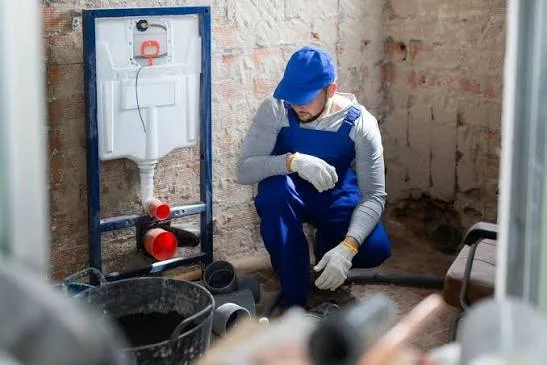
A Dallas plumbing company should carry general liability built around completed operations, commercial auto for every van and truck, contractors equipment for the tools, and in most cases workers compensation. Texas makes comp generally elective for most private employers, but builders and injury lawsuits do not, so the comp choice deserves more thought here than anywhere else in the country.
This is general education, not legal advice. Texas licensing and workers comp rules carry real legal consequences, so confirm anything that affects your license with the Texas State Board of Plumbing Examiners and talk to an attorney before deciding not to carry comp.
What should a Dallas plumbing company carry?
Think of the program as layers, each resting on the one beneath it.
The base is your license and the Responsible Master Plumber who stands behind the company’s work. On top of that sits general liability, the policy that answers when your work damages someone else’s property or injures someone. Next comes the workers comp decision. Then commercial auto for the fleet and equipment coverage for the tools. At the top, an umbrella adds limit above liability, auto and employers liability when contracts ask for it.
The Texas plumbing contractor insurance page covers the state as a whole. The rest of this post works through the layers as a Dallas owner meets them.
Does a Dallas plumbing company need workers comp if Texas does not require it?
Legally, most private employers in Texas may choose not to carry it. Practically, most plumbing companies that work for builders or commercial customers end up carrying it anyway.
Texas is the one state where workers compensation is generally elective rather than mandatory for most private employers, under the non-subscriber system. Texas is not monopolistic, so when a company does carry workers compensation, it is placed with a private carrier.
The reason most plumbing companies carry it is the work. Trenches, confined spaces, scald hazards and attic and crawlspace work all produce injuries, and many general contractors require comp from their subcontractors regardless of what state law allows. A non-subscriber can find itself unable to bid the jobs it wants. The post on where to get workers comp for plumbing employees compares how comp is placed across states.
What does a non-subscriber give up when a plumber is hurt on the job?
It gives up the common-law defenses that comp normally provides. Without comp, an injured employee can sue the company directly, and the company cannot lean on those defenses in that suit. For a trade with trench and confined-space exposure, that is a serious trade.
Some non-subscribing employers buy coverage designed for that situation. It is not workers comp, it responds differently, and it does not satisfy a contract that requires comp. If you are weighing that route, put the comp quote and the alternative side by side, ask what each one pays and when, and have an attorney review your plan for employee injuries.
Revisit the decision as the company changes. A non-subscriber choice that made sense with a small residential crew can look very different once the company adds trench work, hires faster or starts bidding builder contracts. The questions to ask each year are simple: what kind of work the crew now does, what the contracts you want require, and how the business would handle a serious employee injury tomorrow.
Whatever you choose, document it. Builders, lenders and buyers of the business will ask, and a decision made deliberately reads far better than one made by default.
Why do slab leaks put completed operations at the center of a Dallas liability policy?
Because the soil keeps testing your work long after you leave. Expansive clay soils across North Texas move with wet and dry cycles, stressing the water and drain lines that run beneath a slab. The result is a heavy book of slab-leak repairs and repipes in Dallas–Fort Worth.
Those jobs are finished work buried under a home. If a repair fails later and water reaches flooring, walls or a tenant’s belongings, the claim falls on the completed-operations part of your general liability. How the form treats the damage, and how it treats the cost of redoing your own work, are the two things to understand before a claim. The post on water damage and completed operations explains both.
Freeze adds a second test. A hard freeze in a region built for heat can burst lines in attics and exterior walls, and emergency repairs made under pressure belong in the same completed-operations conversation.
Records do a lot of quiet work here. Slab-leak jobs often involve leak detection, a reroute or a tunnel repair, and a later dispute can turn on what was found and what was recommended. Keep the detection results, photos of the exposed line, the customer’s choice between repair options, and a note of any advice you gave about foundation movement. When a claim arrives months later, those notes are what separate a failure in your work from a new problem the soil created.
Ask your agent, too, whether the liability policy carries any exclusion tied to subsidence, earth movement or foundation work. Wording varies by carrier, and a slab-leak specialist should know exactly how its form reads before the first claim, not during it.
Real-World Scenario: A Dallas–Fort Worth plumbing company built its book on residential slab-leak repairs and chose to be a non-subscriber while it was small. When a production builder offers steady repipe and new-home work, the subcontract requires workers comp, additional insured status on completed operations and an umbrella. The owner reviews the comp decision with the agency and an attorney, places comp with a private carrier, adds the liability endorsements and an umbrella, and signs the subcontract knowing every term is met.
Where does your Responsible Master Plumber fit into the insurance picture?
At the base of it. The Texas State Board of Plumbing Examiners licenses plumbers through a tiered progression of Apprentice registration, Tradesman Plumber-Limited, Journeyman and Master, with a Responsible Master Plumber standing behind a plumbing company’s work.
Underwriters want to know who that person is, how involved they are in daily jobs, and how apprentices and tradesmen are supervised. Supervision is one of the clearest signals a carrier has about how finished work will hold up, which matters more in a slab-leak market than almost anywhere. If the Responsible Master Plumber leaves or changes, tell your agent and the Board promptly. You can review the Board’s rules on its own site, and the Texas cost guide covers how the licensing tiers feed the price.
What do Dallas–Fort Worth builders expect on your certificate?
They expect it to match their contract word for word. Production builders and general contractors across the metro commonly ask for additional insured status, often including completed operations, a waiver of subrogation, primary and noncontributory wording, minimum limits on each policy, and workers comp.
Each of those is a policy term or an endorsement, not a box on a form. Send the insurance section of each subcontract to your agent before you sign it, and ask what the policy already provides and what needs to be added. For residential service companies, the residential plumbing services page describes how we approach service and repipe work.
How should a growing Dallas fleet be insured?
On a commercial auto policy that lists every vehicle and every driver. A service van used for business generally belongs on commercial auto rather than a personal policy, and the Insurance Information Institute explains when a business needs commercial auto.
Dallas–Fort Worth is a large, spread-out market, so vans log long days on highways between jobs. Driver records weigh heavily on auto pricing, so check a new hire’s record before handing over keys. Tools and equipment in the vans usually sit on a separate equipment policy, not on auto. The post on commercial auto for multiple vehicles covers how fleets are scheduled as they grow.
If technicians take vans home at night, say so on the application and list where each vehicle is garaged. If employees sometimes run parts or permits in their own cars, ask whether hired and non-owned auto coverage belongs on the policy, since a personal auto policy may not respond the way you expect to a trip made for the business.
How do you put a Dallas program together?
Gather your license details and Responsible Master Plumber information, payroll by role, vehicle and driver list, tool schedule, loss runs and the insurance sections of the contracts you sign. Decide on comp deliberately. Then have an agency that places plumbing work quote each layer. The Texas Department of Insurance regulates insurance in the state and can confirm an agency’s license.
When you are ready, get a Dallas plumbing quote started, or see how Nate and the agency work with contractors before you call.